Interesting blog read.
Just adding to this: However, in my opinion, digital storytelling in the classroom is an easy sell. Speaking in broad generalities: Traditional, spoken-style storytelling is a much harder sell. Read books to kids? Teachers do that. Use PowerPoint and Video in their classrooms? Teachers do that. Use storytelling which are person to person narrative processes between students and the rest of the world? Not yet and there is very little understanding of why we "oralists" would want to be or even have a place in the classroom.
Digital storytelling is an easy sell. We've been doing it since filmstrips and slide projectors. I took classes on it back in the 80's. Two of our schools in our school district just got new "smart" classroom buildings. By reading the news, you would think that communication has just now been invented since kids can "participate" in their classes.
Yep, give me an artist-in-residence week with your kids, allowing me to teach and coach storytelling. Your writing scores will go up, your reading levels will go up and your kids will participate in ways you never thought possible. And you won't once have to plug anything in. And, what I teach them will be used across the curriculum. It's completely portable and can be duplicated by all students regardless of a student's economic situation.
Try that with digital storytelling. You can't.
Sunday, August 26, 2007


Monday, August 20, 2007
I Had Forgotten How Good You Are.
"I had forgotten how good you are," they both said.
And it was my fault that they forgot.
Okay, let me see if I can put in writing what I learned this weekend.
Over the weekend, I had a chance to do multiple presentations for an organization. Back in the day, about 10 years ago, I used to work as a storyteller with this group every week, sometimes multiple times per week. For many reasons such as their staff (read that: decision makers) and location change for their group, I had lost touch with many of the members of that organization. I had gotten lazy with my mailing list and dropped people off the list under the assumption that they would not be interested.
Ah, did you see that word in there....assumption....assume "means that you make..." Oh, you know the rest of that one.
Now, this weekend, after many years of not working with this group, I now had a major event with them, primarily because one of my regular sponsors (who is now based at this location) called me and said, "why aren't you coming up to this place anymore?" That put things in motion, contracts were signed and there I was again.
Afterwards, two different people who had seen me work with them "way back when" came up to me separately and said, "I had forgotten how good you are." Although flattered by the evaluations, I asked how come they hadn't been in contact with me for their needs. The both replied that they had lost track of me and that "i stopped getting your mailings so I assumed you weren't doing this anymore."
EEEK!
Yes, I know. They might have used the Internet to find me. A reality check here calls us to remember that not everyone (yet) thinks about the Internet when searching for people they know. And 8-10 years ago folks were barely using Email to communicate let alone Googling storytellers.
Postal mailing still work. These two people judged my availability based on my mailings. How many bookings and good events had I missed because I stopped sending monthly mailings to these two people?
Let's do the math. Let's average a post card, mailed out, to 50 cents each. That's probably too high. Ten years of mailings, 12 months per year gets us 120 mailings. That's $60 each or $120 to both folks over the last 10 years.
How many bookings had I missed in ten years with these potential sponsors because I took them off my mailing list? $120 is a fraction of a single booking. I saved myself $1 per month not mailing to these folks who knew "how good you are" but probably lost several thousand dollars in bookings, coaching and performances. There are also lost relationships and lost chances to promote the Art of Storytelling.
Sigh.
Remember, they did not ask to be removed. I will always remove someone who asks. Rather, I assumed they wouldn't want to hear from me based on the actions of their leadership.
Am I making sense here? Some marketing gurus say that you need at least 50 contacts a year with customers to keep yourself at the top of their minds. I urge my clients to do at least monthly mailings.
And now, I'll urge them to never take a potential sponsor off a list unless asked.
"I had forgotten how good you are," they said.
It was my fault that they forgot.
And it was my fault that they forgot.
Okay, let me see if I can put in writing what I learned this weekend.
Over the weekend, I had a chance to do multiple presentations for an organization. Back in the day, about 10 years ago, I used to work as a storyteller with this group every week, sometimes multiple times per week. For many reasons such as their staff (read that: decision makers) and location change for their group, I had lost touch with many of the members of that organization. I had gotten lazy with my mailing list and dropped people off the list under the assumption that they would not be interested.
Ah, did you see that word in there....assumption....assume "means that you make..." Oh, you know the rest of that one.
Now, this weekend, after many years of not working with this group, I now had a major event with them, primarily because one of my regular sponsors (who is now based at this location) called me and said, "why aren't you coming up to this place anymore?" That put things in motion, contracts were signed and there I was again.
Afterwards, two different people who had seen me work with them "way back when" came up to me separately and said, "I had forgotten how good you are." Although flattered by the evaluations, I asked how come they hadn't been in contact with me for their needs. The both replied that they had lost track of me and that "i stopped getting your mailings so I assumed you weren't doing this anymore."
EEEK!
Yes, I know. They might have used the Internet to find me. A reality check here calls us to remember that not everyone (yet) thinks about the Internet when searching for people they know. And 8-10 years ago folks were barely using Email to communicate let alone Googling storytellers.
Postal mailing still work. These two people judged my availability based on my mailings. How many bookings and good events had I missed because I stopped sending monthly mailings to these two people?
Let's do the math. Let's average a post card, mailed out, to 50 cents each. That's probably too high. Ten years of mailings, 12 months per year gets us 120 mailings. That's $60 each or $120 to both folks over the last 10 years.
How many bookings had I missed in ten years with these potential sponsors because I took them off my mailing list? $120 is a fraction of a single booking. I saved myself $1 per month not mailing to these folks who knew "how good you are" but probably lost several thousand dollars in bookings, coaching and performances. There are also lost relationships and lost chances to promote the Art of Storytelling.
Sigh.
Remember, they did not ask to be removed. I will always remove someone who asks. Rather, I assumed they wouldn't want to hear from me based on the actions of their leadership.
Am I making sense here? Some marketing gurus say that you need at least 50 contacts a year with customers to keep yourself at the top of their minds. I urge my clients to do at least monthly mailings.
And now, I'll urge them to never take a potential sponsor off a list unless asked.
"I had forgotten how good you are," they said.
It was my fault that they forgot.
Tuesday, August 07, 2007
New Project: Storytelling and Gaming
3 Brothers and 1 Golden Axe:
Real Storytelling in Virtual Worlds
Welcome to our newest interactive workshop from Master Storyteller K. Sean Buvala
Increase the immersive feel of your gaming world and tap into essential human needs and desires with the power of real storytelling!
Learn what real (not the ethereal read a book to kiddies!) storytelling can teach you about virtual worlds.Learn more at: www.seantells.com/gaming.shtml
Learn: What is the basic structure of storytelling? It's got nothing to do with reading books.
Experience: What are the dark sides of fairy tales? Why are stories so cleaned up from the original versions? Sean will take you through the "unvarnished versions" of some popular tales.
Learn: What are "tale types" and what do they teach about human nature? Tap into these cross-cultural realities and bring new breath to your gaming world!
Explore: What is the "Geometry of Storytelling?" Why good storytelling allows every audience to have a unique experience every time.
Learn: What is the role of numbers in storytelling? 3 brothers, 7 Ravens, 12 tasks? Learn which numbers have significance and what they can tell you about the story and storyline.
Explore: How can the concept of "many voices/one story" help designers? Immerse yourself in quests and game experiences by playing a game of "shifting looks."
Ready to get started? Assemble your designer team and contact Sean for more information. Workshop can be presented in one (good!) or two (best!) workday format
About Your Presenter:
K. Sean Buvala, a 21 year veteran and master storyteller, is the director of storyteller.net, now celebrating their 10th anniversary online! Working throughout the U.S., he is storytelling, training and presenting to and for corporations, schools, churches and private coaching clients. Sean recently received a 2007 Oracle Award from the National Storytelling Network. He is an approved Roster Artist with the Arizona Commission on the Arts. Sean specializes in the folktales of Ireland and the Brothers Grimm, working with adults and teens. He has a variety of CD's released, ranging from stories for children to a specialty product for teenage guys to unvarnished world folktales.
Sean is an "avid casual" gamer with a long history back to the Compuserve days of "Islands of Kesmai." (Here is a picture of his original character: "A"). He currently plays in a variety of gaming world as his travel schedule allows. He's worked as an independent-contractor GM and customer service rep for an old-school gaming company, consulted and taught IT with the
Real Storytelling in Virtual Worlds
Welcome to our newest interactive workshop from Master Storyteller K. Sean Buvala
Increase the immersive feel of your gaming world and tap into essential human needs and desires with the power of real storytelling!
Learn what real (not the ethereal read a book to kiddies!) storytelling can teach you about virtual worlds.Learn more at: www.seantells.com/gaming.shtml
Learn: What is the basic structure of storytelling? It's got nothing to do with reading books.
Experience: What are the dark sides of fairy tales? Why are stories so cleaned up from the original versions? Sean will take you through the "unvarnished versions" of some popular tales.
Learn: What are "tale types" and what do they teach about human nature? Tap into these cross-cultural realities and bring new breath to your gaming world!
Explore: What is the "Geometry of Storytelling?" Why good storytelling allows every audience to have a unique experience every time.
Learn: What is the role of numbers in storytelling? 3 brothers, 7 Ravens, 12 tasks? Learn which numbers have significance and what they can tell you about the story and storyline.
Explore: How can the concept of "many voices/one story" help designers? Immerse yourself in quests and game experiences by playing a game of "shifting looks."
Ready to get started? Assemble your designer team and contact Sean for more information. Workshop can be presented in one (good!) or two (best!) workday format
About Your Presenter:
K. Sean Buvala, a 21 year veteran and master storyteller, is the director of storyteller.net, now celebrating their 10th anniversary online! Working throughout the U.S., he is storytelling, training and presenting to and for corporations, schools, churches and private coaching clients. Sean recently received a 2007 Oracle Award from the National Storytelling Network. He is an approved Roster Artist with the Arizona Commission on the Arts. Sean specializes in the folktales of Ireland and the Brothers Grimm, working with adults and teens. He has a variety of CD's released, ranging from stories for children to a specialty product for teenage guys to unvarnished world folktales.
Sean is an "avid casual" gamer with a long history back to the Compuserve days of "Islands of Kesmai." (Here is a picture of his original character: "A"). He currently plays in a variety of gaming world as his travel schedule allows. He's worked as an independent-contractor GM and customer service rep for an old-school gaming company, consulted and taught IT with the
Friday, August 03, 2007
New Workshop: Storytelling and Gaming
3 Brothers and 1 Golden Axe: Real Storytelling in Virtual Worlds
Welcome to our newest interactive workshop from Master Storyteller K. Sean Buvala
Increase the immersive feel of your gaming world and tap into essential human needs and desires with the power of real storytelling!
Learn what real (not the ethereal read a book to kiddies!) storytelling can teach you about virtual worlds.Learn more at: www.seantells.com/gaming.shtml
Learn: What is the basic structure of storytelling? It's got nothing to do with reading books.
Experience: What are the dark sides of fairy tales? Why are stories so cleaned up from the original versions? Sean will take you through the "unvarnished versions" of some popular tales.
Learn: What are "tale types" and what do they teach about human nature? Tap into these cross-cultural realities and bring new breath to your gaming world!
Explore: What is the "Geometry of Storytelling?" Why good storytelling allows every audience to have a unique experience every time.
Learn: What is the role of numbers in storytelling? 3 brothers, 7 Ravens, 12 tasks? Learn which numbers have significance and what they can tell you about the story and storyline.
Explore: How can the concept of "many voices/one story" help designers? Immerse yourself in quests and game experiences by playing a game of "shifting looks."
Ready to get started? Assemble your designer team and contact Sean for more information. Workshop can be presented in one (good!) or two (best!) workday format
About Your Presenter:
K. Sean Buvala, a 21 year veteran and master storyteller, is the director of storyteller.net, now celebrating their 10th anniversary online! Working throughout the U.S., he is storytelling, training and presenting to and for corporations, schools, churches and private coaching clients. Sean recently received a 2007 Oracle Award from the National Storytelling Network. He is an approved Roster Artist with the Arizona Commission on the Arts. Sean specializes in the folktales of Ireland and the Brothers Grimm, working with adults and teens. He has a variety of CD's released, ranging from stories for children to a specialty product for teenage guys to unvarnished world folktales.
Sean is an "avid casual" gamer with a long history back to the Compuserve days of "Islands of Kesmai." (Here is a picture of his original character: "A"). He currently plays in a variety of gaming world as his travel schedule allows. He's worked as an independent-contractor GM and customer service rep for an old-school gaming company, consulted and taught IT with the
Welcome to our newest interactive workshop from Master Storyteller K. Sean Buvala
Increase the immersive feel of your gaming world and tap into essential human needs and desires with the power of real storytelling!
Learn what real (not the ethereal read a book to kiddies!) storytelling can teach you about virtual worlds.Learn more at: www.seantells.com/gaming.shtml
Learn: What is the basic structure of storytelling? It's got nothing to do with reading books.
Experience: What are the dark sides of fairy tales? Why are stories so cleaned up from the original versions? Sean will take you through the "unvarnished versions" of some popular tales.
Learn: What are "tale types" and what do they teach about human nature? Tap into these cross-cultural realities and bring new breath to your gaming world!
Explore: What is the "Geometry of Storytelling?" Why good storytelling allows every audience to have a unique experience every time.
Learn: What is the role of numbers in storytelling? 3 brothers, 7 Ravens, 12 tasks? Learn which numbers have significance and what they can tell you about the story and storyline.
Explore: How can the concept of "many voices/one story" help designers? Immerse yourself in quests and game experiences by playing a game of "shifting looks."
Ready to get started? Assemble your designer team and contact Sean for more information. Workshop can be presented in one (good!) or two (best!) workday format
About Your Presenter:
K. Sean Buvala, a 21 year veteran and master storyteller, is the director of storyteller.net, now celebrating their 10th anniversary online! Working throughout the U.S., he is storytelling, training and presenting to and for corporations, schools, churches and private coaching clients. Sean recently received a 2007 Oracle Award from the National Storytelling Network. He is an approved Roster Artist with the Arizona Commission on the Arts. Sean specializes in the folktales of Ireland and the Brothers Grimm, working with adults and teens. He has a variety of CD's released, ranging from stories for children to a specialty product for teenage guys to unvarnished world folktales.
Sean is an "avid casual" gamer with a long history back to the Compuserve days of "Islands of Kesmai." (Here is a picture of his original character: "A"). He currently plays in a variety of gaming world as his travel schedule allows. He's worked as an independent-contractor GM and customer service rep for an old-school gaming company, consulted and taught IT with the
Saturday, July 07, 2007
Listen to the Luckiest PodCast Ever: 07/07/07
It’s time for the luckiest podcast of the year! The 07/07/07 podcast is here. Included are two "luck" stories recorded just for this podcast by Sean Buvala, a piece of a wonderful story by Dolores Hydock, and a coaching moment about voice control for stage and recording booth. Listen in (it’s an mp3) and let the luck spread! You can find the CD’s mentioned in the podcast at our podcast sponsor of storytellingproducts.com: "Calling Out a Rising Sun" by Sean Buvala and "Silence" by Dolores Hydock. Visit Storyteller.net for more Podcasts or you’ll find us as well at Itunes. You can learn more about Sean at seantells.com.
Lucky, lucky you! Click Here Now to Listen or Download.
Lucky, lucky you! Click Here Now to Listen or Download.
Thursday, June 21, 2007
Red Pen Storytelling Tool

For storytellers, our sculpting tools should include the red “cross it out” pen. In my youth, I once heard an old comedy album where the comedian said, “When you are trying to tell a story, try having a point. It makes it so much more interesting for an audience.”
I’ve attended several storytelling events of late that bring that old comedy routine to mind.
I’ve wanted to hand the tellers a giant red pen, hoping they’d cut out, cross out and eliminate the bloatedness of their tales.
Although it’s not always possible to have a clear-cut point in telling folktales or world myths, storytellers need to know “why” they are telling any particular story. If not, stories end up as rambling and meandering exercises in hearing ourselves talk. When that happens, the stories lose interest, and our audiences just lose interest.
Doing the red pen routine with personal tales is easier, so let’s begin there.
First, understand that storytelling is an audience-centered art form. It’s not a form of therapy for the storyteller.
Grab yourself a piece of paper and do this exercise with me.
First, choose a personal tale from your repertoire.
Then imagine the type of audience you’ll be telling to and with.
With those thoughts in mind, ask yourself, "why am I telling the story?" What is my point?
Identify this first thought, this singular crystal-clear point, and write it across the top of the paper. Use large, bold letters.
Underneath those big bold letters, write an outline your story. What’s first, second, third.....sixth, etc? Try to include all the elements of your typical telling of that story, including those tangential side trips you might be normally inclined to make.
Now comes the step so many tellers are unwilling to make. Grab your red pen. Re-read your main point. Go down your outline and ask yourself for each numbered item, “Does this item illustrate or lead to my main point?” If it does not, cross it out.
This is where some storytellers start reaching for the oxygen mask. “But, what you want me to cut out is (funny, cute, touching, meaningful, pretty, insightful, witty, makes my grandma laugh, tells people I love dogs, will save the world, etc). I couldn’t cut out that part.”
Yes, you could.
Yes, you should.
If it does not move your story towards your main point for the audience you are addressing, draw a line and drop it from your story. Most likely, the parts you’ve redlined are or could become stories in their own way.
The process I have just described is a good exercise to do with your storytelling coach. Ask that person to help you identify and redline the excessive parts of your story that drag down your work. One of the challenges with storytelling as an art form is our excessive focus on internal (“How does your storytelling make you feel?”) coaching, so it may be hard to find a mentor that will be honest with you.
You should assure your coach that having an opinion is okay.
This ability to redline one’s work to focus on the audience's needs is essential for good storytelling. Tellers unwilling to redline their stories just leave me wishing for the door.
A storyteller who tells a story that has been redlined and crafted leaves me wishing for more of their craft. Isn’t that the goal- building a love for stories and storytelling in our audiences
Thursday, May 24, 2007
May 2007 PodCast Posted
Here's another storytelling Podcast from Storyteller.net and some of our storytellers. You'll hear Brother Sun, Sister Moon do their version of "The Virgin Queen." You'll hear a coaching moment recorded live at on of my workshops. You'll also hear Eva Grayzel do her musically enhanced version of "The Stone Cutter." Come listen now. Click Here to listen.
Brought to you by our sponsors at storytellingproducts.com and fulltimestorytelling.com. Thanks for listening.
Brought to you by our sponsors at storytellingproducts.com and fulltimestorytelling.com. Thanks for listening.
Monday, May 14, 2007
Business Storytelling: Are You Ready for Five Minutes of Fame?
Here is my latest challenge for you.
Let's pretend that the Woman who runs the World's Largest Afternoon Talk (WLATS) show wants to talk about your business on Her show. You Know Who I mean. She is going to randomly pick an employee from your organization to speak.
Let's pretend that YOU have been chosen to represent your company on Her WLATS show. You will have only 5-10 minutes on the show to share your experience and to convince people that they should be calling your company for their needs. Like it or not, 10 minutes on that show can translate into bazillions of contacts. So, you have 5-10 minutes to grab the attention of the audience.
What would you say? If you said you'd talk about your financial security, how nice your buildings are and your 24 hour service, then you lose. All of your competitors say they have those, even if they don't.
You've got 5-10 minutes. What story, the one that touches the heart and imagination of the audience, will you tell? Stop now and choose one. If you have taken my training work, you have your Intentionality Journal to help you. My training courses give you tools that work.
Side note for some of you: This is *not* an exercise in the "elevator speech" process. "Elevator speeches" are dead. Relationships are alive. Stories build relationships.
1.Choose your story.
2.Choose your point.
3. Choose where the story will start.
4. Choose the other episodes that help you get your point across.
5. Choose the ending. Maybe you go back to the opening sentence to close?
6. Find someone and tell them your story. Open your mouth and tell the story. The only way to learn is to do it.
This exercise is for everyone in your company. It is for the Executive Team. It is for the new cashier who was just hired this week.
"Hah Ha, Very funny. WLATS is going to randomly pick an employee? Oh, that will never happen." you say. Do you want to bet? It is already happening every day. Potential customers, guests and potential employees randomly meet your staff every day. Are all of your current staff ready to tell a story or two?
Executive People: Will you model your 5-10 minute talk-show story for the rest of your company within the next seven days?
Let's pretend that the Woman who runs the World's Largest Afternoon Talk (WLATS) show wants to talk about your business on Her show. You Know Who I mean. She is going to randomly pick an employee from your organization to speak.
Let's pretend that YOU have been chosen to represent your company on Her WLATS show. You will have only 5-10 minutes on the show to share your experience and to convince people that they should be calling your company for their needs. Like it or not, 10 minutes on that show can translate into bazillions of contacts. So, you have 5-10 minutes to grab the attention of the audience.
What would you say? If you said you'd talk about your financial security, how nice your buildings are and your 24 hour service, then you lose. All of your competitors say they have those, even if they don't.
You've got 5-10 minutes. What story, the one that touches the heart and imagination of the audience, will you tell? Stop now and choose one. If you have taken my training work, you have your Intentionality Journal to help you. My training courses give you tools that work.
Side note for some of you: This is *not* an exercise in the "elevator speech" process. "Elevator speeches" are dead. Relationships are alive. Stories build relationships.
1.Choose your story.
2.Choose your point.
3. Choose where the story will start.
4. Choose the other episodes that help you get your point across.
5. Choose the ending. Maybe you go back to the opening sentence to close?
6. Find someone and tell them your story. Open your mouth and tell the story. The only way to learn is to do it.
This exercise is for everyone in your company. It is for the Executive Team. It is for the new cashier who was just hired this week.
"Hah Ha, Very funny. WLATS is going to randomly pick an employee? Oh, that will never happen." you say. Do you want to bet? It is already happening every day. Potential customers, guests and potential employees randomly meet your staff every day. Are all of your current staff ready to tell a story or two?
Executive People: Will you model your 5-10 minute talk-show story for the rest of your company within the next seven days?
Tuesday, May 01, 2007
Of Thank You Notes, Colored Pencils and Corporate Storytelling
Chapter One of this Generic Story: The Thank You Note
The latest thank-you note I got was from a 7th grade boy. It was written with one of those pencils where the lead changes color every few strokes. It's like a box of crayons exploded all over the letters. Every kid thinks they are the first person to ever write a note with those kind of pencils. Adults couldn't have possibly ever had something so cool as this. In his cascading colors note, he told me that he and his friends thought my stories I told in his school were "exciting." I, of course, thought this note was a classroom assignment. You know, something like: write the Storyteller and say "thank you." Turns out, this was a spontaneous action on this kid's part. He wrote a note, put it in an envelope, got a stamp and sent it. Getting these notes, from adults and kids, is one of the things I really like about being a professional storyteller.
When's the last time your (teenagers or students) experienced anything that made them hand write a note...for which they were not getting graded? When was the last time the teens in your life had something that wasn't electric grab their attention so thoroughly? That is the power of live storytelling and that is what I do.
Chapter Two of this Generic Story: Corporate Secrets
I'd like to share with you a little reality. Your customers aren't paying attention to your advertising and sales slogging anymore.
They've heard it all before. Numbers no longer slake their thirsts. If you are using the "we're number one" bit, that doesn't impress them. Your "100's of locations" map doesn't matter.
You've burned out their patience and their "Broca's" region is turned off. Your old "hard skills" have worn down to fracturing thinness. Yawn.
I know, you want to hold on to your slick presentation folders, your staff full of degrees, your nice office building. Your professional self-image. Yikes.
So, what are they, your customers, paying attention to? They want you to "surprise Broca." Go ahead and Google that. They're paying attention to and they are thirsting for, the one thing or two that sets you apart. This thing that will scream past their boredom, grab hold of their right-brains and poke them squarely in their mind's eye.
They want your stories. YOUR stories. What makes YOU in YOUR organization exist? You know, if you were really honest about it, your company is not that much different
than your competitors. Go on, no one's looking. Be honest. Let go of your "corporate mythology" of how your Goliath-ness is David proof.
What is different? Your stories? Do you have the most compelling reasons, narratives, records of what keeps your current customers with you? What's the story?
Put my money where my mouth is? What's my story? There are lots of storytellers out there. Principals at schools get packages from storytellers all the time. What makes Sean different? Here's one of many things: I capture the attention of Junior High kids so deeply and so that they run to their textbooks and computers when I am done to learn more about the literature and world folktales that I've been teaching and storytelling. When I work with teens, they write me thank you letters afterwards. Yes, handwritten letters. It's amazing. 13 year olds (even guys) writing, even when they don't have to. That's what sets me apart: stories about how teens are motivated to read, research and write when I am done in the classroom.
Hold on to your slick handouts and your Powerpoints. Facts are okay and needed. What your customers are going to remember are your stories that frame and focus your number and your facts.
Relationships sell. Relationships are built on our stories. They who tell the best story get the sales. They who tell the best story get the most conversion and buy in. This is a hard skill. "Connecting" is no longer an optional skill in business.
And after all my blathering above, what you're going to remember is the story about the multi-colored-lead pencils. Why? Because you probably had some when you were a kid or you've bought them for your own kids. Connecting.
The latest thank-you note I got was from a 7th grade boy. It was written with one of those pencils where the lead changes color every few strokes. It's like a box of crayons exploded all over the letters. Every kid thinks they are the first person to ever write a note with those kind of pencils. Adults couldn't have possibly ever had something so cool as this. In his cascading colors note, he told me that he and his friends thought my stories I told in his school were "exciting." I, of course, thought this note was a classroom assignment. You know, something like: write the Storyteller and say "thank you." Turns out, this was a spontaneous action on this kid's part. He wrote a note, put it in an envelope, got a stamp and sent it. Getting these notes, from adults and kids, is one of the things I really like about being a professional storyteller.
When's the last time your (teenagers or students) experienced anything that made them hand write a note...for which they were not getting graded? When was the last time the teens in your life had something that wasn't electric grab their attention so thoroughly? That is the power of live storytelling and that is what I do.
Chapter Two of this Generic Story: Corporate Secrets
I'd like to share with you a little reality. Your customers aren't paying attention to your advertising and sales slogging anymore.
They've heard it all before. Numbers no longer slake their thirsts. If you are using the "we're number one" bit, that doesn't impress them. Your "100's of locations" map doesn't matter.
You've burned out their patience and their "Broca's" region is turned off. Your old "hard skills" have worn down to fracturing thinness. Yawn.
I know, you want to hold on to your slick presentation folders, your staff full of degrees, your nice office building. Your professional self-image. Yikes.
So, what are they, your customers, paying attention to? They want you to "surprise Broca." Go ahead and Google that. They're paying attention to and they are thirsting for, the one thing or two that sets you apart. This thing that will scream past their boredom, grab hold of their right-brains and poke them squarely in their mind's eye.
They want your stories. YOUR stories. What makes YOU in YOUR organization exist? You know, if you were really honest about it, your company is not that much different
than your competitors. Go on, no one's looking. Be honest. Let go of your "corporate mythology" of how your Goliath-ness is David proof.
What is different? Your stories? Do you have the most compelling reasons, narratives, records of what keeps your current customers with you? What's the story?
Put my money where my mouth is? What's my story? There are lots of storytellers out there. Principals at schools get packages from storytellers all the time. What makes Sean different? Here's one of many things: I capture the attention of Junior High kids so deeply and so that they run to their textbooks and computers when I am done to learn more about the literature and world folktales that I've been teaching and storytelling. When I work with teens, they write me thank you letters afterwards. Yes, handwritten letters. It's amazing. 13 year olds (even guys) writing, even when they don't have to. That's what sets me apart: stories about how teens are motivated to read, research and write when I am done in the classroom.
Hold on to your slick handouts and your Powerpoints. Facts are okay and needed. What your customers are going to remember are your stories that frame and focus your number and your facts.
Relationships sell. Relationships are built on our stories. They who tell the best story get the sales. They who tell the best story get the most conversion and buy in. This is a hard skill. "Connecting" is no longer an optional skill in business.
And after all my blathering above, what you're going to remember is the story about the multi-colored-lead pencils. Why? Because you probably had some when you were a kid or you've bought them for your own kids. Connecting.
Sunday, April 22, 2007
April 2007 Podcast is Here!
I’ve posted our latest podcast from Storyteller.net and Seantells.com. The link is below or you can find it on Itunes. You can also find it on my Myspace page.
We did something a little different with this podcast. I recently spent a day as guest artist in a 7th grade classroom. That’s with young people about 12 and 13 years old. I recorded large portions of the day. I’ve narrowed those recordings down to a 35 minute podcast. There are four stories in there and a coaching moment. Even the coaching moment comes from the day with the kids.
You’ll hear this again on the podcast, but I wanted to talk a bit about this here. As you know, those of you who have taken my storytelling training or coaching, that although you as a teller and your stories may remain consistent, when you change your audience you change your style. So for this group, I was speaking specifically to a small group (25 or so kids) in a small room. It was a close and intimate environment as oppsed to a big stage or an entire school assembly. The kids had also just finished a week of Arizona's mandatory testing, so they, and the teachers in the school, were pretty exhausted. We like to describe these mandatory tests as "no child left untested." We had a casual, informal day together.The risk anyone takes when they put forth recordings of themselves is that the listeners will think, “Oh, that is the way they always tell.” That’s simply not true of any storyteller anywhere. Well, at least the ones who understand their craft.
As you listen to this piece, keep the above paragraph in mind. Like all tellers, I have a variety of styles to choose from (and have chosen from) when my audience is 2 or 2000, aged 12 or 72, big stage or small classroom.
And, before you write me (ha ha!) about the Hades and Demeter comment, please know that I know it’s Persephone that brings the Spring, not her mother.
Our podcasts are sponsored by StorytellingProducts.com. Please stop by and support our work by purchasing a CD or Book from there. Thanks.
I hope you enjoy this month’s podcast. Click here to get it now.
Tuesday, April 17, 2007
Happy Birthday to Storyteller.net
Happy Birthday to us at Storyteller.net. This month, April 2007, Storyteller.net turns 10 years old! Ten years is forever in Internet terms. Excuse me for a moment as I enjoy this. It is rare to read a note from me that is so "yay for us" in nature, but I think we deserve it this time around.
I am proud of what we have done and what we have achieved. Others have said, and I agree, that Storyteller.net has helped storytelling move forward not only on the Internet but in the world community as well. I had already been working nationally as a storyteller for 10 years when we created Storyteller.net. As a pro, I knew what needed to happen on the Internet for storytellers and was fortunate to be able to create that. Storyteller.net has never been "Sean's site." Rather, it's been "our site," tellers both near and far, since the beginning. Our remake in 2002 just made a good thing better. Storyteller.net has been a labor of love for many years, a gift to tellers and our guests.
We were the first to offer a comprehensive online directory for storytellers initially at no cost and now just $25 per year. More than 400 tellers have used or are using our services and we're glad to have given you a home. We've watched tellers transition and grow from simple, beginning local tellers to some of the best nationally-travelled tellers in the business. What a joy that has been.
We were the first to offer a diverse collection of online audio stories, free for listening for audiences all over the world. There's also a growing collection of written stories on our site. We were the first with an online, no-charge events calendar.
We've had two editions of the Storyteller.net store, with our current store at StorytellingProducts.com going strong. Again, if memory serves me correctly, we were the first to offer the ability for national online sales to the local tellers of the world. There's some imitators coming along, but we were the first to "level the playing field" for storytellers everywhere.
We were the first to offer the pod-cast like Amphitheater with storytelling interviews and performances. Yep, we were doing "podcasts" before they even had a word to describe "podcasts." I remember my business partner telling me that I was "crazy" to do those Amphitheaters and then several days later saying he thought the idea would prove to be brilliant. Little did we know that what we were doing was very far ahead of the Internet pack.
In ten years, we've had a variety of other firsts. I always enjoy reading when another storytelling organization or individual promotes their idea as "the first ever..." when we've been doing it since 1997. Lots of people imitate our model. We're pleased to be able to have offered so much, usually at no or very little cost, to so many people. Thousands of people each week come and take advantage of everything we have at Storyteller.net. We're glad you are here.
Watch for more changes in this our 10th Anniversary year. Over the coming weeks and months, we'll be sharing with you reviews and comments from our guests and members. We'll also be introducing new features to help you learn more about the Art of Storytelling. We have a live event (they call it "brick and mortar" in 'Net lingo) in the works that I think will be one more risk-taking, cutting-edge offering from Storyteller.net, one we hope will help change the way we all think about the nature of storytelling and who the "best" in storytelling are or will be. Whew! I am nervous just typing that one out!
I think you'll be pleased, tickled and challenged by what's over the bend for the next ten years.
Thanks for indulging me in this birthday letter.
Thanks for being with us.
I am proud of what we have done and what we have achieved. Others have said, and I agree, that Storyteller.net has helped storytelling move forward not only on the Internet but in the world community as well. I had already been working nationally as a storyteller for 10 years when we created Storyteller.net. As a pro, I knew what needed to happen on the Internet for storytellers and was fortunate to be able to create that. Storyteller.net has never been "Sean's site." Rather, it's been "our site," tellers both near and far, since the beginning. Our remake in 2002 just made a good thing better. Storyteller.net has been a labor of love for many years, a gift to tellers and our guests.
We were the first to offer a comprehensive online directory for storytellers initially at no cost and now just $25 per year. More than 400 tellers have used or are using our services and we're glad to have given you a home. We've watched tellers transition and grow from simple, beginning local tellers to some of the best nationally-travelled tellers in the business. What a joy that has been.
We were the first to offer a diverse collection of online audio stories, free for listening for audiences all over the world. There's also a growing collection of written stories on our site. We were the first with an online, no-charge events calendar.
We've had two editions of the Storyteller.net store, with our current store at StorytellingProducts.com going strong. Again, if memory serves me correctly, we were the first to offer the ability for national online sales to the local tellers of the world. There's some imitators coming along, but we were the first to "level the playing field" for storytellers everywhere.
We were the first to offer the pod-cast like Amphitheater with storytelling interviews and performances. Yep, we were doing "podcasts" before they even had a word to describe "podcasts." I remember my business partner telling me that I was "crazy" to do those Amphitheaters and then several days later saying he thought the idea would prove to be brilliant. Little did we know that what we were doing was very far ahead of the Internet pack.
In ten years, we've had a variety of other firsts. I always enjoy reading when another storytelling organization or individual promotes their idea as "the first ever..." when we've been doing it since 1997. Lots of people imitate our model. We're pleased to be able to have offered so much, usually at no or very little cost, to so many people. Thousands of people each week come and take advantage of everything we have at Storyteller.net. We're glad you are here.
Watch for more changes in this our 10th Anniversary year. Over the coming weeks and months, we'll be sharing with you reviews and comments from our guests and members. We'll also be introducing new features to help you learn more about the Art of Storytelling. We have a live event (they call it "brick and mortar" in 'Net lingo) in the works that I think will be one more risk-taking, cutting-edge offering from Storyteller.net, one we hope will help change the way we all think about the nature of storytelling and who the "best" in storytelling are or will be. Whew! I am nervous just typing that one out!
I think you'll be pleased, tickled and challenged by what's over the bend for the next ten years.
Thanks for indulging me in this birthday letter.
Thanks for being with us.
Friday, February 16, 2007
Darkness and Light
Dark and cold usually surrounded these moments, but darkness was always required. We’d be gathered with 20 or 200 city teens under the stars, usually standing together in a circle. Sometimes the circle was more clumpy than circular. The depths of how dark it could be, out in the clearing of the forests of Prescott, always astounded them. Their astonishment always astounded me. And, once they turned off their flashlights and were truly surrounded by a smothering blanket of deep night, they would gasp in astonishment. How easy it was to succumb to the darkness, that darkness which we thought we had mastered.
The kids would always start to chatter in the darkness as if their noise would hold back the monsters or at least the unkown. I’d ask them to be silent. When they were able to do so, I’d ask them to look up and that’s when the deepest gasp and awe would begin. For although they had been out here many nights during the week, they had never actually looked up. For if they had, the would have already seen the thick smear of stars across the night sky. Silence would settle over them and I’d begin to sing:
"You are child of the universe,
No less than the trees and the stars.
You are child of the Lord of Life,
Be still and know I am God, you are child."
Eventually they’d join me in song. A Cappella singing by teens in the forest: Mind Opening.
I was and am moved by the power that even these little bits of light, concentrated in such a small area, can have on people. I found it ironic that although we walk amongst the stars for many nights and months, we seldom look up. How many times have we walked (under near over around) points of light and missed it? Is that storytelling in itself?
The kids would always start to chatter in the darkness as if their noise would hold back the monsters or at least the unkown. I’d ask them to be silent. When they were able to do so, I’d ask them to look up and that’s when the deepest gasp and awe would begin. For although they had been out here many nights during the week, they had never actually looked up. For if they had, the would have already seen the thick smear of stars across the night sky. Silence would settle over them and I’d begin to sing:
"You are child of the universe,
No less than the trees and the stars.
You are child of the Lord of Life,
Be still and know I am God, you are child."
Eventually they’d join me in song. A Cappella singing by teens in the forest: Mind Opening.
I was and am moved by the power that even these little bits of light, concentrated in such a small area, can have on people. I found it ironic that although we walk amongst the stars for many nights and months, we seldom look up. How many times have we walked (under near over around) points of light and missed it? Is that storytelling in itself?
Sunday, November 26, 2006
The Long and Winding Thank You Note.
Last week, I had the chance to be a guest speaker at a Master Class for children's literature course. The class was composed of elementary school teachers working on their Master's degree. We had a great time learning about storytelling and its classroom role. I tend towards a very active presentation regardless of the the audience. We told stories, we laughed, they risked, we all learned. What was most interesting was the hand written thank-you note the group of students. It was printed on a standard 8.5" x 11"sized piece of yellow construction paper and appears that they passed the paper around to build the story. Each section after the leading ellipses was in a new handwriting. This has to be one of my favorite thank-you notes ever. Sharing it with you now:
Such fun. Thanks for the note!!
(Blog keywords: storytelling, storyteller, children's, story, storyteller.net, buvala)
"...Once upon a time, there was a boy named Sean who liked to tell stories.
...His story started as soon as he walked in the classroom. The faces looking at him and waiting in anticipation made his heart thump and his creative juices flowing.
...The class was mesmerized by his first story, enjoying every word immensely.
..And then he asked his audience to PERFORM. This wasn't meant to be tit for tat, as they say. But this boy named Sean was a risk-taker, a challenger, a rumple-stumple hell raisin' kind of guy and he shook up the crowd for sure!
...The there was an absent gal who's hearing all the grand details...that now is feeling an aweful void in her heart wishing she was there.
...She sure missed the loud voice that come from his lungs and heart. Can't wait to hear such a story in voice on November 21st at Barnes and Noble.
...I hope Sean knows and realizes he has made a great impact on us. "
Such fun. Thanks for the note!!
(Blog keywords: storytelling, storyteller, children's, story, storyteller.net, buvala)
Tuesday, November 21, 2006
10 Pieces of Quick, Blunt Advice for Those Who Are Starting Out on the Road to new Teller-dom
<>10 Pieces of Quick, Blunt Advice for Those Who are Starting Out on the Road to New "Professional" Teller-dom.
1. "Professional" is about you and your ability to deliver above and beyond what your clients need. Professional is knowing what those needs are before your client knows they have them. If you call yourself "professional" just because you make money at it, stop. Always give value above and beyond what your client has paid for. Give, give, give.
 2. You need a repertoire of at least twice what your client and audience seek. If they want 1/2 hour, then you need at least an hour. If you want to work festivals, you need at least six hours of no-repeat material and another two hours as back up.
3. Get listed in on-line directories. Your clients are searching the Internet no matter if you "get it" or are "comfortable with it." Start with the best (and yet still most affordable) directory at Storyteller.net.
4. Use both sides of your business card.
5. Large postcards are king for direct postal mail. You need to have at least monthly contact with everyone on your mailing list. Some pros I work with say at
...Read the rest at Storyteller.net at:
http://www.storyteller.net/articles/210
1. "Professional" is about you and your ability to deliver above and beyond what your clients need. Professional is knowing what those needs are before your client knows they have them. If you call yourself "professional" just because you make money at it, stop. Always give value above and beyond what your client has paid for. Give, give, give.
3. Get listed in on-line directories. Your clients are searching the Internet no matter if you "get it" or are "comfortable with it." Start with the best (and yet still most affordable) directory at Storyteller.net.
4. Use both sides of your business card.
5. Large postcards are king for direct postal mail. You need to have at least monthly contact with everyone on your mailing list. Some pros I work with say at
...Read the rest at Storyteller.net at:
http://www.storyteller.net/articles/210
Monday, November 20, 2006
Repost: Tellabration Part Two
To hear part two of the Tellabration Podcast, click here. To hear part one, see the entry above or below this one. You can also hear (in Windows Media) individual parts of the program in our Amphitheater at Storyteller.net.
Sunday, November 19, 2006
November PodCast: Tellabration 2006 (Part Two)
Part Two!! Storyteller.net was pleased to present a Tellabration(tm) in Avondale, AZ. Part of our regular monthly "Storyteller.net @ Borders" events, our Tellabration featured seven tellers from around the state of Arizona. As a treat for you, we have the entire night presented in a a two-part Podcast for you right here! The Tellabration is a trademark program of the National Storytelling Network, which coordinates (loosely) more than 300 storytelling events around the U.S. and the world the third Saturday in November. Our online store at Storytellingproducts.com is our sponsor for the Borders nights.
To hear part two of the Podcast, click here. To hear part one, see the entry above or below this one. You can also hear (in Windows Media) individual parts of the program in our Amphitheater at Storyteller.net.
To hear part two of the Podcast, click here. To hear part one, see the entry above or below this one. You can also hear (in Windows Media) individual parts of the program in our Amphitheater at Storyteller.net.
November PodCast: Tellabration 2006 (Part One)
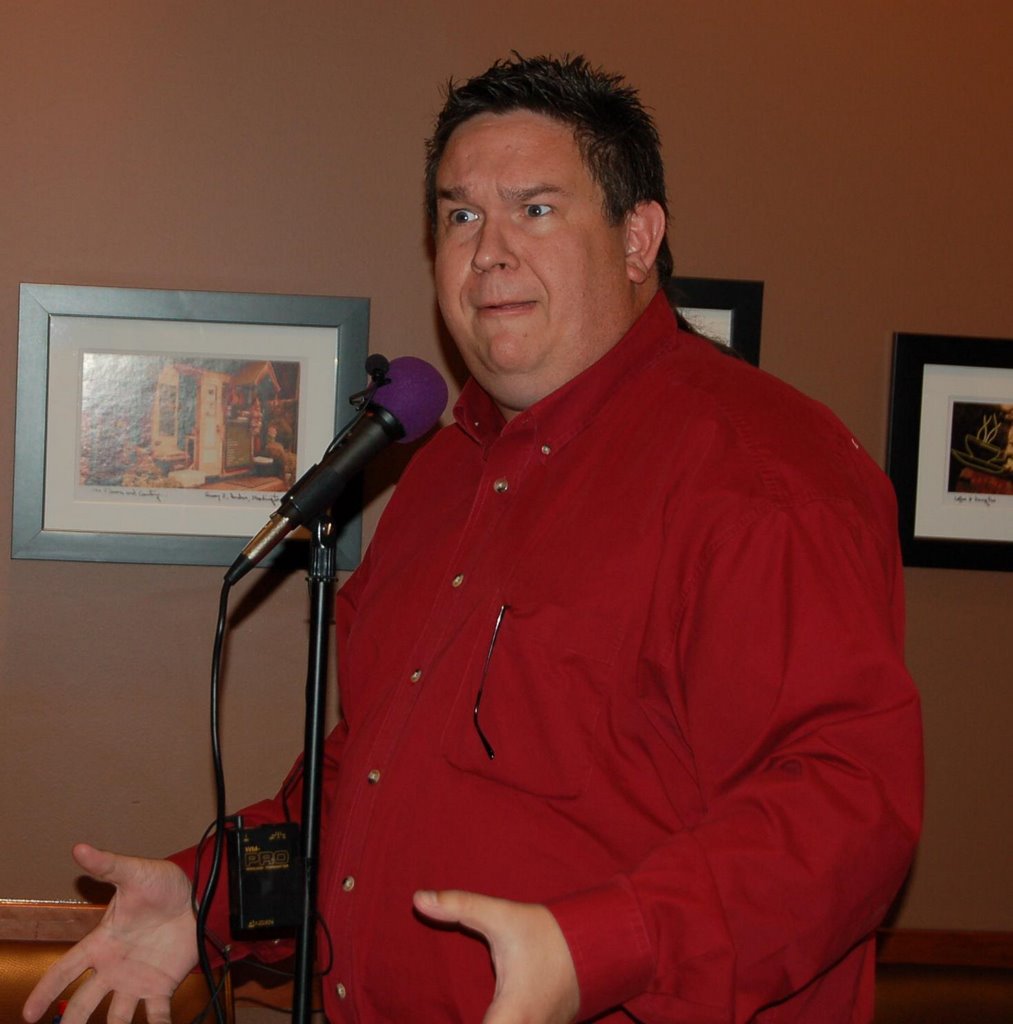
Storyteller.net was pleased to present a Tellabration(tm) in Avondale, AZ. Part of our regular monthly "Storyteller.net @ Borders" events, our Tellabration featured seven tellers from around the state of Arizona. As a treat for you, we have the entire night presented in a two-part Podcast for you right here! The Tellabration is a trademark program of the National Storytelling Network, which coordinates (loosely) more than 300 storytelling events around the U.S. and the world the third Saturday in November. Our online store at Storytellingproducts.com is our sponsor for the Borders nights.
To hear part one of the Podcast, click here. To hear part two, see the entry above or below this one. You can also hear (in Windows Media) individual parts of the program in our Amphitheater at Storyteller.net.
Our night was attended by 40 or so participants. Our Borders nights are pretty fluid so the crowd changes from moment to moment, but the core group of people remained steady at 40. I'm grateful to our tellers for their permission to share this night in audio form with you: Sandy Oglesby, Bonnie Angster, Glenda Bonin, Penny Morningstar, Elly Reidy and Carol Knarr for their stories and their time. I also was in the line up and our night was MC'd by Erin Benites.
I've gotta say it was a great night of storytelling. Sandy, Penny, Glenda, Elly and Carol all told personal tales. Bonnie shared a quick humor tale and I told an obscure Brothers Grimm fairy tale. Great night and great telling. I hope you enjoy our digital Tellabration(tm) as much as we enjoyed it live in Arizona! Look for other Podcasts in this blog!
Wednesday, November 08, 2006
50 Reasons to Use Storytelling in Business: #1
Reason #1: Storytelling transforms work from what “they make us do” to “what we do together.”
Many folks outside of your management layers don’t always clearly and concisely know what is going on in the organization. Trust me, you do have layers no matter how hard you might try not to have them. They are there. Learning to share the corporate story helps the “them” to become the “us.” Ownership and buy-in increases when “we are” working together on a commonality instead of “they are” working us. When I know the story, when I participate in the formation of that story, I then become vested in it.
Let's look at this another way. Think about the task of preparing a meal. Will you provide more love and care with that meal if you are going to eat the meal instead of simply preparing it for others? Of course you would do better! In the same way, those who form, know and enjoy the story. . .well, you get the idea.
So, when we are forming and sharing the story together, knowing the history, knowing the arc of the narrative of our corporate story, we grow as a team toward a common set of goals.
Many folks outside of your management layers don’t always clearly and concisely know what is going on in the organization. Trust me, you do have layers no matter how hard you might try not to have them. They are there. Learning to share the corporate story helps the “them” to become the “us.” Ownership and buy-in increases when “we are” working together on a commonality instead of “they are” working us. When I know the story, when I participate in the formation of that story, I then become vested in it.
Let's look at this another way. Think about the task of preparing a meal. Will you provide more love and care with that meal if you are going to eat the meal instead of simply preparing it for others? Of course you would do better! In the same way, those who form, know and enjoy the story. . .well, you get the idea.
So, when we are forming and sharing the story together, knowing the history, knowing the arc of the narrative of our corporate story, we grow as a team toward a common set of goals.
Sunday, October 22, 2006
October 2006 Podcast: Stories of the "Season"
Time for some late October seasonal tales, yes? Let's see, we have nightmares and cats, ghosts and graves, bones and dancing, and ghosts with black eyes.
The October 2006 Storyteller.net Podcast is here! You can listen with or without an Ipod or an mp3 player! Click this link right here to listen on your computer.
You can also get the October Podcast on Itunes when you use this link now.
This month’s Podcast, posted late in the month for the stories "of the season," features storytellers Priscilla Howe, K. Sean Buvala, Ellouise Schoettler, and Bob and Kathie Myers.
The Podcast is sponsored by StorytellingProdcuts.com. Come see the brand new online store!
Subscribe to:
Posts (Atom)


 Posts
Posts


