How to Tell a Story?
One of the most searched-for communication skills on the Internet is "how to tell a story." I would like to give you a quick step-by-step guide to this process of story telling, drawn from my 30+ years of being a professional storyteller. This is the fast and quick method to learn a new story.
1. Decide on a story. Sounds elementary, but at some point, you need to find a story that you love. If you are having problems, search the Internet for some simple Aesop fables or find some good stories at a site like Storyteller.net .
2. Break the story down into an outline of events so that you can remember the episodes of each story.
You have two choices for step three. Do one or both if you would like.
3A. Write out or draw out the parts of the story. Using longhand, that means pencil and paper, write out the episodes of the story in your own words. Do not copy the story. Rewrite it in your own words. Doing this process by hand allows your brain to overcome any resistance you might have to the story. Knowing you can do this process with your story is also a way for your brain to overcome some fear of public speaking that might hinder you from telling this story.
3B. The other way to break down a story is via "storyboarding," a technique that many storytellers use. Take a letter-sized piece of paper. Fold it in half along the length. You now have an eleven inch piece of pager that looks like a taco. Then, fold the right side up against the left and then fold the same way again. When you unfold the paper you will have a piece of paper divided into 8 segments.
Starting at the top segment, draw out each step of the story. This is only for you to learn so stick figures and bad drawings are just fine. This visual method may help you grasp the story better than writing alone.
4. Begin to tell yourself the story, aloud, using your own words while looking at one of the #3 tools above. Repeat this process several times.
5. Think about the story you are telling. Are there parts of the story that do not really need to be there? Do they drag down the story? Cross them off the list or the storyboard and tell yourself the story one more time with those parts of the story removed. Again, at each of these times, you are speaking your story aloud. Let your face get a feel for the story.
6. Put your notes down and tell yourself the story a few more times. This is a great exercise to do while you are driving your car or cleaning your house. Just keep talking to yourself.
7. Call up a friend or find an associate and tell them your story. Use no notes or storyboard. When you finish telling the story to your associate, ask them if it makes sense to them. Did they think you left out any parts? This is not the time to see if they "get it" or understand the deep meanings. You just want to know if the essential delivery of the story makes sense.
8. As your confidence in the story grows, you will want to start thinking about the emotions represented by different words in the story. You may find that you wish to emphasize one part or character over another. These things come with time. If you feel better about saying "once upon a time" at the beginning or "the end" as one of your story endings, then do so. As you grow to understand storytelling even more, you will learn so many other ways to start or end a story.
9. When it is time for your story's debut, be confident. Look at your audience. Speak clearly. Slow down and enjoy the story experience. As a professional storyteller, I can tell you that it takes a dozen or more tellings of a story to find the your true rhythm and delivery for each story.
There you have it, how to tell a great story! This is a quick, get-it-now guide to storytelling. There is so much more you can learn about how to tell a story. Remember- get started today telling stories. Like a painter who must paint often to get better at painting, you, too, must speak stories often and to many groups in order to improve.
Some resources:
For hundreds of articles and stories, please visit www.storyteller.net. To order the EWorkbook on storytelling that includes live coaching and audio files, please visit www.storytelling101.com
****
Based in Arizona, Sean Buvala is a full-time professional storyteller and storytelling consultant who works throughout North America teaching storytelling for business. Along with storytelling techniques for corporate communication, Sean is also sought after for teaching storytelling for teachers of middle school and high-school students. For more information about Sean's work as a storytelling coach, please see his site at www.seantells.com
The official blog for K. Sean Buvala, storyteller and storytelling coach.
Sunday, March 22, 2009


Thursday, March 19, 2009
Video: How to Use Gestures in Storytelling and Public Speaking
Here's a brand new, eight-minute video on using gestures in storytelling and public speaking skills. We are thinking about making a series of storytelling techniques videos. Storytelling for teens? Storytelling for business? This is a prototype we assembled here in the office. (I said "we" like I have a monkey in shirt pocket.)YouTube of course botches the quality of these things but you can see a High-Quality version at YouTube or I can get you the 1.7 Gig version if you want it. Don't watch it in full-screen. Eww.
Have fun watching. It was fun to make. Any of you video production people want to joint venture with me on a project? Ahem.
The official blog for K. Sean Buvala, storyteller and storytelling coach.
Have fun watching. It was fun to make. Any of you video production people want to joint venture with me on a project? Ahem.
The official blog for K. Sean Buvala, storyteller and storytelling coach.
Saturday, March 14, 2009
Storytelling Techniques in an Eworkbook from an Experienced Storytelling Consultant.
Would you like to start learning storytelling techniques- right now?
Wow! We've relaunched the "Storytelling 101" Workbook as an Ebook project. You now get immediate access to the workbook in a an immediate download. I am so happy about this new facelift to this project.
I have been a storytelling coach for a few decades and I understand what people want and need from a storytelling consultant. I've packed these exercises into this workbook and you can be learning from me in just a few minutes.
In addition, you get a chance to pick the brain of storytelling trainer: ME! Buy the book and you get free telephone story coaching with me. There are also two storytelling teleseminars included in the kit once you register your purchase.
I am very proud of how we could put this "storytelling consultant" idea into a downloadable Ebook.
Please come learn more at http://www.storytelling101.com. Your purchase is backed by a one-year 100% promise of satisfaction.
Thanks for your time. Come get my book. We've got this priced right now at an amount that I won't be able to offer for long.
By the way, you can get a free storytelling Ecourse from me. Just look over there in the sidebar to sign up. The Ecourse is not nearly as in-depth as the Ebook of storytelling techniques, but you'll still learn a bunch- and at no cost.
Thanks.
The official blog for K. Sean Buvala, storyteller and storytelling coach.
Wow! We've relaunched the "Storytelling 101" Workbook as an Ebook project. You now get immediate access to the workbook in a an immediate download. I am so happy about this new facelift to this project.
I have been a storytelling coach for a few decades and I understand what people want and need from a storytelling consultant. I've packed these exercises into this workbook and you can be learning from me in just a few minutes.
In addition, you get a chance to pick the brain of storytelling trainer: ME! Buy the book and you get free telephone story coaching with me. There are also two storytelling teleseminars included in the kit once you register your purchase.
I am very proud of how we could put this "storytelling consultant" idea into a downloadable Ebook.
Please come learn more at http://www.storytelling101.com. Your purchase is backed by a one-year 100% promise of satisfaction.
Thanks for your time. Come get my book. We've got this priced right now at an amount that I won't be able to offer for long.
By the way, you can get a free storytelling Ecourse from me. Just look over there in the sidebar to sign up. The Ecourse is not nearly as in-depth as the Ebook of storytelling techniques, but you'll still learn a bunch- and at no cost.
Thanks.
The official blog for K. Sean Buvala, storyteller and storytelling coach.
Saturday, March 07, 2009
Get My Daily Tips On Twitter
At noon (AZ time) every day, Monday through Friday, I post a a storytelling tip or concept. I have to be very succinct to get it to 120 characters. The other 20 characters are take up in the title.

Here's a sample:
Come follow me on Twitter to get these mini ideas. I am having much fun with them. My user name is @storyteller .
Friday, March 06, 2009
Storytelling in Business Podcast: Storytelling is Not a Soft Skill.
The next episode of our "Storytelling and Narrative for Business Podcast" is ready for you!
Episode Four: "Storytelling is Not a 'Soft Skill': Sure Looked Easy"
Sean brings you some tough-love this week to help you understand that storytelling is a "hard skill" for your business. Fail that understanding and things can go bad. Get real coaching and training to sharpen your skills.
Listen in: Episode Four
Find all the podcasts in this series on this page here.
Sponsored by: Executive Speaker Training Workshops.
The official blog for K. Sean Buvala, storyteller and storytelling coach.
Episode Four: "Storytelling is Not a 'Soft Skill': Sure Looked Easy"
Sean brings you some tough-love this week to help you understand that storytelling is a "hard skill" for your business. Fail that understanding and things can go bad. Get real coaching and training to sharpen your skills.
Listen in: Episode Four
Find all the podcasts in this series on this page here.
Sponsored by: Executive Speaker Training Workshops.
The official blog for K. Sean Buvala, storyteller and storytelling coach.
Are Videos Really Storytelling?
Over at Kathy Hansen's excellent blog, A Storied Career, she posted a very popular video that's floating around the Internet. It's a visual explanation of the financial crisis. I truly enjoy Kathy's blog and think she's one of the few quality and consistent bloggers for storytelling out there.
I disagreed, in this case, that the video was storytelling. Regarding the video and digital storytelling, my casual comments I left were:
It's informative.
It's useful.
It's fun to watch.
It's a great video experience.
It's educational.
It's a way to understand a complex subject.
It should be seen by many people.
It's something that I am glad that I watched.
It's something that deserves attention.
It doesn't need to tagged as storytelling to make it valuable. It stands well on it's own as a powerful video that serves a good purpose. It has value as art in its use of video.
If everything is storytelling, then nothing is storytelling.
It's not storytelling.
A hammer is no less a valuable tool just because it's not a screwdriver.
This video doesn't have to be storytelling in order to still be excellent.
And it is excellent.
Kathy, you have illustrated the a real issue: Just what is storytelling?
For me, storytelling takes people. I have videos on YouTube of me doing storytelling, but the videos are *not* storytelling. They are video records of my storytelling and they pale by compare to the video quality and technique of the above video you posted.
We do a disservice to both storytelling expertise and video expertise by not treating each to its own unique charism and definition.
I can talk about the financial crisis by retelling (speaking) the stories of others or using world tales to illustrate the meaning. A program of these stories, used to frame the video above, would be a powerful evening of conveying an idea through the dual communication methods of storytelling and video.
If I had to attach a shelf to a wall, I would have different tools to choose from based on how I wanted the shelf attached. I could use a hammer, screwdriver or glue gun, for example. Each is a different way of getting to the same goal.
If I had to talk about the financial crisis, I could choose different tools based on how I wanted the audience to understand the issue. I could use oral storytelling, writing, video or dance. Each is a different way of getting to the same goal.
I shall stop rambling now.
Let's stop calling all communication storytelling. Let's recognize that there are many ways to get a message out and storytelling, the one-to-one even-in-a-crowd oral technique (or ASL), is one very exciting way. Let's not dilute everything into one single pool called storytelling. Let's value the many ways to express story.
Having practiced and taught the art of storytelling for many years, I think it's the most effective and cost effective way to communicate. However, I know that all art forms (video included) are equally important contributors to the conversation.
By the way, add Kathy's blog to your regular reading. It's that good.
The official blog for K. Sean Buvala, storyteller and storytelling coach.
I disagreed, in this case, that the video was storytelling. Regarding the video and digital storytelling, my casual comments I left were:
It's informative.
It's useful.
It's fun to watch.
It's a great video experience.
It's educational.
It's a way to understand a complex subject.
It should be seen by many people.
It's something that I am glad that I watched.
It's something that deserves attention.
It doesn't need to tagged as storytelling to make it valuable. It stands well on it's own as a powerful video that serves a good purpose. It has value as art in its use of video.
If everything is storytelling, then nothing is storytelling.
It's not storytelling.
A hammer is no less a valuable tool just because it's not a screwdriver.
This video doesn't have to be storytelling in order to still be excellent.
And it is excellent.
Kathy, you have illustrated the a real issue: Just what is storytelling?
For me, storytelling takes people. I have videos on YouTube of me doing storytelling, but the videos are *not* storytelling. They are video records of my storytelling and they pale by compare to the video quality and technique of the above video you posted.
We do a disservice to both storytelling expertise and video expertise by not treating each to its own unique charism and definition.
I can talk about the financial crisis by retelling (speaking) the stories of others or using world tales to illustrate the meaning. A program of these stories, used to frame the video above, would be a powerful evening of conveying an idea through the dual communication methods of storytelling and video.
If I had to attach a shelf to a wall, I would have different tools to choose from based on how I wanted the shelf attached. I could use a hammer, screwdriver or glue gun, for example. Each is a different way of getting to the same goal.
If I had to talk about the financial crisis, I could choose different tools based on how I wanted the audience to understand the issue. I could use oral storytelling, writing, video or dance. Each is a different way of getting to the same goal.
I shall stop rambling now.
Let's stop calling all communication storytelling. Let's recognize that there are many ways to get a message out and storytelling, the one-to-one even-in-a-crowd oral technique (or ASL), is one very exciting way. Let's not dilute everything into one single pool called storytelling. Let's value the many ways to express story.
Having practiced and taught the art of storytelling for many years, I think it's the most effective and cost effective way to communicate. However, I know that all art forms (video included) are equally important contributors to the conversation.
By the way, add Kathy's blog to your regular reading. It's that good.
The official blog for K. Sean Buvala, storyteller and storytelling coach.
Wednesday, February 25, 2009
National Professional Storyteller Brings Live, Literacy-Building Performance to Maryvale-Area (Arizona) School
Press Release Immediate Release
National Professional Storyteller Brings Live, Literacy-Building Performance to Maryvale-Area School on Friday, February 27, 2009.
Avondale Arizona- As part of the literacy program of "Read Across America," the students at Lela Alston Elementary School in the Maryvale area of the West Valley will be treated to a presentation by national professional storyteller K. Sean Buvala on Friday, February 27, 2009 at 11:00 in the morning. The school is located at 4006 West Osborn Road in Phoenix.
As a presenter for the school's "Read Across America Program," Sean Buvala will use oral storytelling to entice the students to explore the many great books in the libraries in their neighborhoods and school. Mr. Buvala is donating the performance to the low-income school.
"As a storyteller, I don't actually read books to students," Mr. Buvala said. "Rather, through the use of the oral tradition, my stories excite kids to jump up and go directly to the 398.2 section of the library to find many of the stories I've told them. Often, at the end of my programs, I will tell students just the first half of a story. After the final applause, it never fails that students will immediately go to the bookshelves to find the final portion of the story. I have even seen a few teachers peruse the library or the classroom Internet to find the story themselves."
Research indicates that teaching children to create and communicate with oral storytelling improves reading and writing skills and test scores. Buvala stated, "Oral storytelling not only encourages kids to use their imaginations but helps with other skills such as sequencing and vocabulary development. Principals have told me that adding storytelling and other performing arts increases the overall test scores of the students. Over the last several decades, I have been honored to help bring the power of story to so many schools and certainly am glad to help Alston school achieve their goals as well."
Sean Buvala, the director of Storyteller.net with more than two decades of national experience, is especially glad to help schools in his home state of Arizona. "I travel frequently to teach in a variety of corporate and school settings. It is always an honor and even fun to do things here in my own hometown. Most recently, I did a tour of the Washington school district here and that was a very unique opportunity to be involved in my own community."
Mr. Buvala, who also teaches corporate storytelling workshops in Avondale, Arizona, can be reached at his website at www.seantells.com. For more information about the Lela Alston Elementary school, please contact their office at (602) 442-3000.
Contact Information
K. Sean Buvala sean@storyteller.net
www.seantells.net
(623) 298-4548
###
The official blog for K. Sean Buvala, storyteller and storytelling coach.
National Professional Storyteller Brings Live, Literacy-Building Performance to Maryvale-Area School on Friday, February 27, 2009.
Avondale Arizona- As part of the literacy program of "Read Across America," the students at Lela Alston Elementary School in the Maryvale area of the West Valley will be treated to a presentation by national professional storyteller K. Sean Buvala on Friday, February 27, 2009 at 11:00 in the morning. The school is located at 4006 West Osborn Road in Phoenix.
As a presenter for the school's "Read Across America Program," Sean Buvala will use oral storytelling to entice the students to explore the many great books in the libraries in their neighborhoods and school. Mr. Buvala is donating the performance to the low-income school.
"As a storyteller, I don't actually read books to students," Mr. Buvala said. "Rather, through the use of the oral tradition, my stories excite kids to jump up and go directly to the 398.2 section of the library to find many of the stories I've told them. Often, at the end of my programs, I will tell students just the first half of a story. After the final applause, it never fails that students will immediately go to the bookshelves to find the final portion of the story. I have even seen a few teachers peruse the library or the classroom Internet to find the story themselves."
Research indicates that teaching children to create and communicate with oral storytelling improves reading and writing skills and test scores. Buvala stated, "Oral storytelling not only encourages kids to use their imaginations but helps with other skills such as sequencing and vocabulary development. Principals have told me that adding storytelling and other performing arts increases the overall test scores of the students. Over the last several decades, I have been honored to help bring the power of story to so many schools and certainly am glad to help Alston school achieve their goals as well."
Sean Buvala, the director of Storyteller.net with more than two decades of national experience, is especially glad to help schools in his home state of Arizona. "I travel frequently to teach in a variety of corporate and school settings. It is always an honor and even fun to do things here in my own hometown. Most recently, I did a tour of the Washington school district here and that was a very unique opportunity to be involved in my own community."
Mr. Buvala, who also teaches corporate storytelling workshops in Avondale, Arizona, can be reached at his website at www.seantells.com. For more information about the Lela Alston Elementary school, please contact their office at (602) 442-3000.
Contact Information
K. Sean Buvala sean@storyteller.net
www.seantells.net
(623) 298-4548
###
The official blog for K. Sean Buvala, storyteller and storytelling coach.
Press Release: "Bobby Jindal's Response Speech Demonstrates Business Storytelling Do's and Don'ts." says National Storytelling Expert.
Press Release
For Immediate Release
Avondale, AZ- National storytelling expert and speaking coach, K. Sean Buvala, reviews Bobby Jindal's "Republican Response" speech and offers four public-speaking tips gleaned from the Governor's presentation.
Buvala, the director of the national storytelling resource site at Storyteller.net, says, "Regardless of anyone's political preferences, the Governor's speech illustrates that stories and storytelling can be used in any type of important speech. As a corporate storyteller, I was happy to see yet another national figure make use of story in their presentation. I also think that any person using stories can learn four things from Mr. Jindal's speech."
Use intentional hand gestures. Buvala says, "The Governor uses frequent, choppy hand gestures that are synchronous with the syllables of the words he speaks. It looks as if he is conducting an orchestra or cutting onions to the rhythm of his words. Speakers should plan the gestures that they will use with their stories. These intentional movements can then enhance the stories being told instead of being a distraction."
Be careful when using "Me too" stories. Mr. Buvala continues, "While I appreciate and respect the Governor's family story of struggling immigrants, his narrative immediately following his comments regarding the president's family history both lessens and distracts from the power of the Governor's background story. In order to seem less like a 'me too' attempt at connection, the story might have served better at the end of the story. While it is a good thing that the Governor used stories, the placement of those stories must be carefully considered. "
Use tone and pacing appropriate for your audience. Buvala notes that, "Bobby Jindal's pacing, tone and inflection during his speech reminded me of a school teacher giving a motivational speech to young children rather than a thoughtful reaction intended for thinking adults. The constant head nodding, the sharp intake of breath between sentences and the higher pitch of his speaking took power away from his stories, perhaps making his narratives sound childish. I'd suggest that the Governor concentrate on slowing his pace, intentionally speak with a lower pitch and allow himself to breath deeply by using longer pauses more often.
Use stories to "frame" your presentation. "Finally," says Sean Buvala, "although Mr. Jindal's family history story might have been better placed in the speech, he does refer back to his opening story at the end of his presentation, when speaking again of his father's words. This process, called 'framing,' reminds the listeners of the central point of a talk, giving them a virtual 'frame' in which to see the ideas painted with the speaker's words."
Buvala, who teaches monthly public workshops for business storytelling, knows that stories used in national conversations help unify listening audiences. "Governor Jindal's use of personal stories allows the audience to understand the speaker as a human being rather than just a 'talking head' for an ideology."
For more information about group or private coaching in the art of storytelling for corporate or business use, please contact Sean Buvala via his website at www.seantells.net.
Contact Information:
K. Sean Buvala
www.seantells.net
(623) 298-4548
sean@storyteller.net
PO Box 392
Tolleson AZ 85353
"EXPERT CONSULTANT for the Press, Television and Radio"
Storytelling (both traditional and digital), performing artists, public speaking, corporate training, business coaching, non-profit organizations.
PROMOTIONAL PHOTOS
Promotional photos of Sean Buvala are available for download at:
http://www.seantells.com/seanbuvala_1.jpg
http://www.seantells.com/seanbuvala_2.jpg
http://www.seantells.com/seanbuvala_3.jpg
http://www.storyteller.net/sunwind/smallseanbuvala.jpg
http://www.storyteller.net/sunwind/largeseanbuvala.jpg
###
The official blog for K. Sean Buvala, storyteller and storytelling coach.
For Immediate Release
Avondale, AZ- National storytelling expert and speaking coach, K. Sean Buvala, reviews Bobby Jindal's "Republican Response" speech and offers four public-speaking tips gleaned from the Governor's presentation.
Buvala, the director of the national storytelling resource site at Storyteller.net, says, "Regardless of anyone's political preferences, the Governor's speech illustrates that stories and storytelling can be used in any type of important speech. As a corporate storyteller, I was happy to see yet another national figure make use of story in their presentation. I also think that any person using stories can learn four things from Mr. Jindal's speech."
Use intentional hand gestures. Buvala says, "The Governor uses frequent, choppy hand gestures that are synchronous with the syllables of the words he speaks. It looks as if he is conducting an orchestra or cutting onions to the rhythm of his words. Speakers should plan the gestures that they will use with their stories. These intentional movements can then enhance the stories being told instead of being a distraction."
Be careful when using "Me too" stories. Mr. Buvala continues, "While I appreciate and respect the Governor's family story of struggling immigrants, his narrative immediately following his comments regarding the president's family history both lessens and distracts from the power of the Governor's background story. In order to seem less like a 'me too' attempt at connection, the story might have served better at the end of the story. While it is a good thing that the Governor used stories, the placement of those stories must be carefully considered. "
Use tone and pacing appropriate for your audience. Buvala notes that, "Bobby Jindal's pacing, tone and inflection during his speech reminded me of a school teacher giving a motivational speech to young children rather than a thoughtful reaction intended for thinking adults. The constant head nodding, the sharp intake of breath between sentences and the higher pitch of his speaking took power away from his stories, perhaps making his narratives sound childish. I'd suggest that the Governor concentrate on slowing his pace, intentionally speak with a lower pitch and allow himself to breath deeply by using longer pauses more often.
Use stories to "frame" your presentation. "Finally," says Sean Buvala, "although Mr. Jindal's family history story might have been better placed in the speech, he does refer back to his opening story at the end of his presentation, when speaking again of his father's words. This process, called 'framing,' reminds the listeners of the central point of a talk, giving them a virtual 'frame' in which to see the ideas painted with the speaker's words."
Buvala, who teaches monthly public workshops for business storytelling, knows that stories used in national conversations help unify listening audiences. "Governor Jindal's use of personal stories allows the audience to understand the speaker as a human being rather than just a 'talking head' for an ideology."
For more information about group or private coaching in the art of storytelling for corporate or business use, please contact Sean Buvala via his website at www.seantells.net.
Contact Information:
K. Sean Buvala
www.seantells.net
(623) 298-4548
sean@storyteller.net
PO Box 392
Tolleson AZ 85353
"EXPERT CONSULTANT for the Press, Television and Radio"
Storytelling (both traditional and digital), performing artists, public speaking, corporate training, business coaching, non-profit organizations.
PROMOTIONAL PHOTOS
Promotional photos of Sean Buvala are available for download at:
http://www.seantells.com/seanbuvala_1.jpg
http://www.seantells.com/seanbuvala_2.jpg
http://www.seantells.com/seanbuvala_3.jpg
http://www.storyteller.net/sunwind/smallseanbuvala.jpg
http://www.storyteller.net/sunwind/largeseanbuvala.jpg
###
The official blog for K. Sean Buvala, storyteller and storytelling coach.
Friday, February 06, 2009
Newest "Storytelling in Business" Podcast
Our next edition of the “Storytelling and Narrative for Business Podcast” is now available. This time around, we respond to a listener's email asking about the use of jokes, anecdotes and stories. Sean discusses the differences between each of these items as well as tells you the story of "Just Enough." Sponsored by http://www.executivespeakertraining.com/ and presented by http://www.seantells.net/.
Please send your questions and comments to sean@storyteller.net and be sure to put "podcast comments" in the subject line.
Click below to listen in!
Storytelling In Business Podcast #3
Find previous podcasts in this series at this address:
http://seantells.net/audio-and-video/podcasts/
The official blog for K. Sean Buvala, storyteller and storytelling coach.
Please send your questions and comments to sean@storyteller.net and be sure to put "podcast comments" in the subject line.
Click below to listen in!
Storytelling In Business Podcast #3
Find previous podcasts in this series at this address:
http://seantells.net/audio-and-video/podcasts/
The official blog for K. Sean Buvala, storyteller and storytelling coach.
Sunday, January 25, 2009
Falling Off The Hay Wagon: Others Pick Up the Future?
Kathy Hansen, over at the "A Storied Career Blog" made an excellent posting about the ideas of expressing story via technology. She quotes from both the Sundance film projects and the new "The Center for Future Storytelling" at MIT. I think it is worth your time to go read her blog post at this link. It is actually worth your time to read her posts on a regular basis, in my opinion.
Top of my head, visceral thoughts about this interesting post:
They're both off the mark, in my opinion. Oral storytelling, person to persons, is still the "mother of all communication." What is referred to as storytelling in the above examples isn't storytelling. The first is filmmaking- which uses stories. The second is MIT's look at technology to convey stories. Again, not storytelling.
In no way do I disparage either the Sundance or MIT projects. I think both are needed and they do and will do good works. However, we do a disservice to what storytelling truly is when we toss about the word "storytelling" so freely.
I contend that all of the people on these projects need as their base some solid training and experiences in creating and speaking stories- oral storytelling ("traditional narrative?") as it were.
Storytelling (as person to person) was here as the foundation long before technologies sought to harness story.
As one of the first "traditional narrative" storytellers to embrace technology via Storyteller.net, I am for the use of technology to convey story. I am against the concept that technology is needed to rescue storytelling. "Traditional narrative...has been drowned out" is not my daily experience in teaching, training and performing.
What has happened is that we who practice the art have allowed our advocacy of "traditional narrative" to be drowned out. I've come to recognize this as the "hay wagon" syndrome: a rose-colored-glasses approach that says the 1970's days of the storytelling revival were the purest and most genuine when stories were told from the back of the hay wagon in Tennessee.
Some of that failure to advocate also comes from the nature of storytellers to not embrace technology to promote the art. Some failure also comes from infighting of leadership of the national organizations, especially in the U.S.
Finally, I think you ask a valid question about "losing meaning." More than losing meaning, I think stories when presented solely via technology are losing the engagement of the audience. Watching a story happen on film or otherwise delivered via technology requires zero engagement on the part of the viewer. The viewer becomes passive, with the story and its images poured into the head.
As an example: "The Dark Knight," the Batman movie, wanted to talk about the nature of evil. Since it was on film, there was no place for me to engage in that conversation. The movie showed it all to me, made my decisions about images, tried to tell me when to be scared and when to be happy. I loved the movie, but I didn't need to be there for the one-way story to happen. I know now the opinion of the director about a story but was not part of the storytelling.
In "traditional storytelling" I very much need my audience to co-create with me. You can see my short reflection article "Listening Sideways" for a little more about adolescents as co-creator of story. The link is http://storyteller.net/articles/206 .
Kathy, you do a great job making links and conversation points in your blog. Thanks very much.
The official blog for K. Sean Buvala, storyteller and storytelling coach.
Top of my head, visceral thoughts about this interesting post:
They're both off the mark, in my opinion. Oral storytelling, person to persons, is still the "mother of all communication." What is referred to as storytelling in the above examples isn't storytelling. The first is filmmaking- which uses stories. The second is MIT's look at technology to convey stories. Again, not storytelling.
In no way do I disparage either the Sundance or MIT projects. I think both are needed and they do and will do good works. However, we do a disservice to what storytelling truly is when we toss about the word "storytelling" so freely.
I contend that all of the people on these projects need as their base some solid training and experiences in creating and speaking stories- oral storytelling ("traditional narrative?") as it were.
Storytelling (as person to person) was here as the foundation long before technologies sought to harness story.
As one of the first "traditional narrative" storytellers to embrace technology via Storyteller.net, I am for the use of technology to convey story. I am against the concept that technology is needed to rescue storytelling. "Traditional narrative...has been drowned out" is not my daily experience in teaching, training and performing.
What has happened is that we who practice the art have allowed our advocacy of "traditional narrative" to be drowned out. I've come to recognize this as the "hay wagon" syndrome: a rose-colored-glasses approach that says the 1970's days of the storytelling revival were the purest and most genuine when stories were told from the back of the hay wagon in Tennessee.
Some of that failure to advocate also comes from the nature of storytellers to not embrace technology to promote the art. Some failure also comes from infighting of leadership of the national organizations, especially in the U.S.
Finally, I think you ask a valid question about "losing meaning." More than losing meaning, I think stories when presented solely via technology are losing the engagement of the audience. Watching a story happen on film or otherwise delivered via technology requires zero engagement on the part of the viewer. The viewer becomes passive, with the story and its images poured into the head.
As an example: "The Dark Knight," the Batman movie, wanted to talk about the nature of evil. Since it was on film, there was no place for me to engage in that conversation. The movie showed it all to me, made my decisions about images, tried to tell me when to be scared and when to be happy. I loved the movie, but I didn't need to be there for the one-way story to happen. I know now the opinion of the director about a story but was not part of the storytelling.
In "traditional storytelling" I very much need my audience to co-create with me. You can see my short reflection article "Listening Sideways" for a little more about adolescents as co-creator of story. The link is http://storyteller.net/articles/206 .
Kathy, you do a great job making links and conversation points in your blog. Thanks very much.
The official blog for K. Sean Buvala, storyteller and storytelling coach.
Saturday, January 24, 2009
Storytelling in Business Podcast #2
Our next edition of the "Storytelling and Narrative for Business Podcast" is now available.
This week, "What Did the Plumber Know?" and Sean is talking about telling an old-hat or familiar story for your business. Sponsored by http://www.executivespeakertraining.com/ and presented by http://www.seantells.net/.
Listen in:
Storytelling and Narrative for Business Podcast #2
Send us your thoughts and questions in the comments below or find Sean at http://www.twitter.com/storyteller .
The official blog for K. Sean Buvala, storyteller and storytelling coach.
This week, "What Did the Plumber Know?" and Sean is talking about telling an old-hat or familiar story for your business. Sponsored by http://www.executivespeakertraining.com/ and presented by http://www.seantells.net/.
Listen in:
Storytelling and Narrative for Business Podcast #2
Send us your thoughts and questions in the comments below or find Sean at http://www.twitter.com/storyteller .
The official blog for K. Sean Buvala, storyteller and storytelling coach.
Tuesday, January 20, 2009
New "Storytelling in Business" Podcast!
Sponsored by our Ancient Secret of Public Speaking Workshop, I've kicked off the new "Storytelling in Business" podcast. I'm aiming to release a new edition at least every two weeks for this fast-paced, quick listen podcast. Come enjoy it.
And, send me your questions about storytelling in/for: business, coaching, corporate training and public speaking. I'll work them into the line up.
First Edition (mp3) is here:
Episode One: The Guy in the Bathroom
BTW, if you take yourself too seriously, this is not the podcast for you.
The official blog for K. Sean Buvala, storyteller and storytelling coach.
And, send me your questions about storytelling in/for: business, coaching, corporate training and public speaking. I'll work them into the line up.
First Edition (mp3) is here:
Episode One: The Guy in the Bathroom
BTW, if you take yourself too seriously, this is not the podcast for you.
The official blog for K. Sean Buvala, storyteller and storytelling coach.
Tuesday, January 13, 2009
MasterMind Group Forming for Working Performing Artists.
Working Performing Artists: Let's grow your career in 2009! Join us for our next Mastermind Group.
If you’d like to know more about the Storyteller.net Working Artist Mastermind Groups, we have recorded a Q/A (Question and Answer) Session. You can listen in (mp3 file) at this link now.
If you are interested in the first 2009 group (which begins next week), for a future group or just for giggles, then please take a listen to this podcast. You might even learn a thing or two in the QA session even if you don’t join us for the program.
In this recorded call, we talk about:
-the background reasons for forming this group for working artists
-why artists want fast growth education vs. slow growth
-the powers of a Master Mind on your career
-who would make up the members of a Mastermind group
-the typical contents of a group like this
-the real power of the group: accountability
-more about the optional live gatherings
-what a peer review is
-compare and contrast short training vs. long term groups
-unique characteristics of the Mastermind model
-costs and fees
Our next group begins next week. After that, there may or may not be another group beginning in the Spring of 2009.
Interested in more? Contact Sean at sean@storyteller.net and be sure your subject line includes the words “Mastermind Information.”
As of this writing, 2 spaces remain for the group that begins next week. This group is guaranteed to happen. The price increases on Friday. Act now, please.
You can listen in (mp3 file) at this link now.
The official blog for K. Sean Buvala, storyteller and storytelling coach.
If you’d like to know more about the Storyteller.net Working Artist Mastermind Groups, we have recorded a Q/A (Question and Answer) Session. You can listen in (mp3 file) at this link now.
If you are interested in the first 2009 group (which begins next week), for a future group or just for giggles, then please take a listen to this podcast. You might even learn a thing or two in the QA session even if you don’t join us for the program.
In this recorded call, we talk about:
-the background reasons for forming this group for working artists
-why artists want fast growth education vs. slow growth
-the powers of a Master Mind on your career
-who would make up the members of a Mastermind group
-the typical contents of a group like this
-the real power of the group: accountability
-more about the optional live gatherings
-what a peer review is
-compare and contrast short training vs. long term groups
-unique characteristics of the Mastermind model
-costs and fees
Our next group begins next week. After that, there may or may not be another group beginning in the Spring of 2009.
Interested in more? Contact Sean at sean@storyteller.net and be sure your subject line includes the words “Mastermind Information.”
As of this writing, 2 spaces remain for the group that begins next week. This group is guaranteed to happen. The price increases on Friday. Act now, please.
You can listen in (mp3 file) at this link now.
The official blog for K. Sean Buvala, storyteller and storytelling coach.
Tuesday, December 30, 2008
Overhaul to Executive Speaker Training Workshop
I've just posted a major overhaul to the website for the "Ancient Secret of Public Speaking" workshop at http://www.executivespeakertraining.com . Please come take a look. I am still building and tweaking, but I think the new format is much nicer and more user friendly. Come join us in Arizona sometime.
The official blog for K. Sean Buvala, storyteller and storytelling coach.
The official blog for K. Sean Buvala, storyteller and storytelling coach.
Thursday, December 18, 2008
Expert Hails Disney’s New Movie "Bedtime Stories" for featuring the Number One Success Skill for Parents to Presidents.
For Immediate Release
Avondale, AZ- "Telling stories, that is using imagination and seeing situations from new perspectives, is the number one success skill for anyone, from parents to presidents," says K. Sean Buvala, the executive director of Storyteller.net and a national speaking coach for companies and their employees.
"Disney’s new movie ’Bedtime Stories’ of course illustrates the power of storytelling to and with children, but many folks also can learn to use storytelling as their primary tool for expressing the dreams, goals and successes of their business life. The essential concepts used for sharing storytelling with children come into play in any business situation. In the end, the only thing that causes one business to stand out over their competitors is their company story."
Buvala, a veteran of 23 years of professional storytelling, offers five quick tips for any parent who wants to tell stories for and with their child:
1. Learn to accept and use your skills as they are.
In the minds of your children, every story you tell is perfect. So, relax, slow down and think about what happens. Every story needs a beginning, a middle and an end. Once you think of those parts, just let the picture unfold in your mind and speak it to your child. Put down the "professional" story books and tell stories from your own experiences and memories.
2. Let your children add to the story as you go along.
Just like in the movie, if your child wants to add raining gumdrops, space creatures or fire balls, take those items and let them grow in your story. That way, you teach your child to use their imagination and that their contributions to a conversation are valuable. Don’t be too quick to correct for the "right" way to have a story progress.
3. Look your children in the eye.
Buvala says, "I’ve trained parents to tell stories to their children and CEO’s to tell the narrative of their company to board members. In all cases, looking sincerely at your audience expresses interest, increases bonding and grows credibility. Give your children a gift and look at them when you tell stories."
4. Use a variety in your words, not just baby-talk.
Children, from tots to teens, best learn language by hearing it used in conversation. Avoid the temptation to use baby talk with your children. Children grow to be adults so speak like an adult, varying words as you speak. For example, instead of "fast" you might say "quickly" or "rapidly," pausing to briefly define words as you go, if needed. In many cases, children get the meaning of words from the context of your story.
5. Start communicating with your teens before they are teens.
One of the most powerful ways to communicate with teens is by laying the groundwork for conversation while they are young. Storytelling by parents teaches young children that they are important enough to be the center of attention for a few moments during each story. Storytelling also teaches children the power of words, the ebb and flow of conversation and sequencing their thoughts, tools any teenager should have.
Buvala also states these same rules apply to storytelling in business. "Everyone starts where they are with their skills. In today’s market, customers respond better to genuine sharing instead of polished advertising. Also, our business stories are ongoing and when customers can add to the story via social networking, focus groups, feedback forms and so on, they take greater ownership. Being genuinely interested in our customers’ experiences and communicating face-to-face whenever possible is always a chance for growth. Finally, it’s important from the beginning that our corporate approach be one that treats our customers with respect, never talking down to them, explaining things as needed, making a focus on customer needs."
Buvala teaches a multi-day workshop for anyone who wants to learn to use storytelling for business, sales, non-profit or family use. For more information, please visit the website of "Ancient Secret of Public Speaking Workshop" at executivespeakertraining.com.
Contact:
K. Sean Buvala
PO Box 392
Tolleson, AZ 85353
http://www.executivespeakertraining.com
623.298.4548
Keywords:
parenting , business coaching , storytelling , movie , disney , bedtime stories , family , public speaking
###
***View this press release here:
http://www.free-press-release.com/news/200812/1229643560.html
Avondale, AZ- "Telling stories, that is using imagination and seeing situations from new perspectives, is the number one success skill for anyone, from parents to presidents," says K. Sean Buvala, the executive director of Storyteller.net and a national speaking coach for companies and their employees.
"Disney’s new movie ’Bedtime Stories’ of course illustrates the power of storytelling to and with children, but many folks also can learn to use storytelling as their primary tool for expressing the dreams, goals and successes of their business life. The essential concepts used for sharing storytelling with children come into play in any business situation. In the end, the only thing that causes one business to stand out over their competitors is their company story."
Buvala, a veteran of 23 years of professional storytelling, offers five quick tips for any parent who wants to tell stories for and with their child:
1. Learn to accept and use your skills as they are.
In the minds of your children, every story you tell is perfect. So, relax, slow down and think about what happens. Every story needs a beginning, a middle and an end. Once you think of those parts, just let the picture unfold in your mind and speak it to your child. Put down the "professional" story books and tell stories from your own experiences and memories.
2. Let your children add to the story as you go along.
Just like in the movie, if your child wants to add raining gumdrops, space creatures or fire balls, take those items and let them grow in your story. That way, you teach your child to use their imagination and that their contributions to a conversation are valuable. Don’t be too quick to correct for the "right" way to have a story progress.
3. Look your children in the eye.
Buvala says, "I’ve trained parents to tell stories to their children and CEO’s to tell the narrative of their company to board members. In all cases, looking sincerely at your audience expresses interest, increases bonding and grows credibility. Give your children a gift and look at them when you tell stories."
4. Use a variety in your words, not just baby-talk.
Children, from tots to teens, best learn language by hearing it used in conversation. Avoid the temptation to use baby talk with your children. Children grow to be adults so speak like an adult, varying words as you speak. For example, instead of "fast" you might say "quickly" or "rapidly," pausing to briefly define words as you go, if needed. In many cases, children get the meaning of words from the context of your story.
5. Start communicating with your teens before they are teens.
One of the most powerful ways to communicate with teens is by laying the groundwork for conversation while they are young. Storytelling by parents teaches young children that they are important enough to be the center of attention for a few moments during each story. Storytelling also teaches children the power of words, the ebb and flow of conversation and sequencing their thoughts, tools any teenager should have.
Buvala also states these same rules apply to storytelling in business. "Everyone starts where they are with their skills. In today’s market, customers respond better to genuine sharing instead of polished advertising. Also, our business stories are ongoing and when customers can add to the story via social networking, focus groups, feedback forms and so on, they take greater ownership. Being genuinely interested in our customers’ experiences and communicating face-to-face whenever possible is always a chance for growth. Finally, it’s important from the beginning that our corporate approach be one that treats our customers with respect, never talking down to them, explaining things as needed, making a focus on customer needs."
Buvala teaches a multi-day workshop for anyone who wants to learn to use storytelling for business, sales, non-profit or family use. For more information, please visit the website of "Ancient Secret of Public Speaking Workshop" at executivespeakertraining.com.
Contact:
K. Sean Buvala
PO Box 392
Tolleson, AZ 85353
http://www.executivespeakertraining.com
623.298.4548
Keywords:
parenting , business coaching , storytelling , movie , disney , bedtime stories , family , public speaking
###
***View this press release here:
http://www.free-press-release.com/news/200812/1229643560.html
Thursday, December 04, 2008
Corporate Storytelling: 3 Tips For the Nervous Public Speaker
Do you remember your first days without the training wheels on your bike? Were you nervous? Were you even a little bit afraid? Did that fear make you hyper-focused? Was there someone holding on to your bike's seat, guiding you and cheering you on?
When it comes to public speaking, do you find yourself nervous and maybe even afraid? Like that first experience on your bike, let me hold on the seat and help you learn.
1. Let Your Nerves Work for You
I am probably right when I say those few moments of being on a bicycle without training wheels were some of the most focused moments in your life. All your senses were ready to learn. Your nerves, in that case, were working for you.
Nerves are not the enemy. I have been presenting public speaking courses for over two decades and I have never found a good speaker who was not nervous about their work. Notice that I wrote "a good speaker." There are plenty of cocky and arrogant public speakers who are "never nervous" but they present without energy or enthusiasm.
What good are nerves and nervousness for the public speaker? Your nerves keep your energy level high and your focus sharp. Speaking with high energy while focused on your presentation benefits your audience. They are getting a speaker who is truly present to the subject they are presenting instead of someone who is spewing out just another average speech. Before going onstage, accept your nerves as part of being human, take several slow deep breaths, smile big and step onto the stage with energy and enthusiasm.
2. Remember: Your Audience Wants You to Succeed.
When you were riding without the training wheels, were your family or friends standing on the sidewalk hoping you would fall off and hurt yourself? Of course they were not hoping that you would fail.
In public speaking, your audience wants to you to be at your best. They do not want you to be boring as that means they will be bored. Your audience wants to see you having fun or deeply in touch with your subject. In the old days, people were told to imagine the audience in their underwear. That was just horrible advice. Your audience is on your side and you are in partnership with them. Remember, you are the expert and you are giving them a valuable presentation. They want to walk out of the event saying, "Great! I can really use what that speaker was talking about."
3. Good Coaching and Training is Invaluable.
When you were a small child, you did not just hop on to your bicycle and hurry down the street. No, you started with training wheels. Then, someone took off those training wheels and ran behind you, holding on to the seat, while you wobbled down the road. Several falls later, more running and wobbling, and then, whoosh you took off down the road.
Coaching and training for public speaking are invaluable ways to get to the whoosh moments of public speaking. We who coach and train public speaking skills are always getting letters of thanks from our clients who successfully used simple techniques taught in public speaking workshops or private coaching. Seek out the experts who can take you to the next level. You will discover that it is an incredible experience to have a speaking coach who can point out areas where you need to improve and support you in your natural skills as a presenter.
Learn to focus your nervous energy to achieve excellence as a speaker.
The official blog for K. Sean Buvala, storyteller and storytelling coach.
When it comes to public speaking, do you find yourself nervous and maybe even afraid? Like that first experience on your bike, let me hold on the seat and help you learn.
1. Let Your Nerves Work for You
I am probably right when I say those few moments of being on a bicycle without training wheels were some of the most focused moments in your life. All your senses were ready to learn. Your nerves, in that case, were working for you.
Nerves are not the enemy. I have been presenting public speaking courses for over two decades and I have never found a good speaker who was not nervous about their work. Notice that I wrote "a good speaker." There are plenty of cocky and arrogant public speakers who are "never nervous" but they present without energy or enthusiasm.
What good are nerves and nervousness for the public speaker? Your nerves keep your energy level high and your focus sharp. Speaking with high energy while focused on your presentation benefits your audience. They are getting a speaker who is truly present to the subject they are presenting instead of someone who is spewing out just another average speech. Before going onstage, accept your nerves as part of being human, take several slow deep breaths, smile big and step onto the stage with energy and enthusiasm.
2. Remember: Your Audience Wants You to Succeed.
When you were riding without the training wheels, were your family or friends standing on the sidewalk hoping you would fall off and hurt yourself? Of course they were not hoping that you would fail.
In public speaking, your audience wants to you to be at your best. They do not want you to be boring as that means they will be bored. Your audience wants to see you having fun or deeply in touch with your subject. In the old days, people were told to imagine the audience in their underwear. That was just horrible advice. Your audience is on your side and you are in partnership with them. Remember, you are the expert and you are giving them a valuable presentation. They want to walk out of the event saying, "Great! I can really use what that speaker was talking about."
3. Good Coaching and Training is Invaluable.
When you were a small child, you did not just hop on to your bicycle and hurry down the street. No, you started with training wheels. Then, someone took off those training wheels and ran behind you, holding on to the seat, while you wobbled down the road. Several falls later, more running and wobbling, and then, whoosh you took off down the road.
Coaching and training for public speaking are invaluable ways to get to the whoosh moments of public speaking. We who coach and train public speaking skills are always getting letters of thanks from our clients who successfully used simple techniques taught in public speaking workshops or private coaching. Seek out the experts who can take you to the next level. You will discover that it is an incredible experience to have a speaking coach who can point out areas where you need to improve and support you in your natural skills as a presenter.
Learn to focus your nervous energy to achieve excellence as a speaker.
For more information about Sean's workshop that teaches you to harness the power of business or corporate storytelling, please visit our website at http://www.executivespeakertraining.com You are also invited to follow Sean via his Twitter account at http://www.twitter.com/storyteller today.
The official blog for K. Sean Buvala, storyteller and storytelling coach.
Friday, November 21, 2008
Review of our Grumpy Burgers Teleseminar.
Just read this over at a NING group. Thanks, Kath.
I went on Sean's Teleseminar on Monday, and I got lots of new ideas to try, plus heaps of good marketing tips. Some things I knew of (good to get re-inforcement of that knowledge, though), but most were new ideas that will really help me improve our business and get more bookings. Sean teaches a lot of his ideas in point form (which he then elaborates on) - this is great because it makes it easy to take in and remember. I have already started to use some of the ideas, and will add more as I go along.
I've only ever been on one other teleseminar, and one thing I noticed that was different about Sean's way of teaching is that he is very inclusive and approachable. He kept asking if we understood each point, and welcomed and encouraged questions from us - he seemed genuinely interested in our marketing problems, and with helping us.
If your calendar is full and you have no room to squeeze in even one more booking ;o) - you probably don't need to go on the call, but otherwise, I can thoroughly recommend this Teleseminar - you won't have wasted your time by joining it. It's being repeated on Friday evening - here are the details:
http://professionalstoryteller.ning.com/events/surviving-tough-economic-times-1
Cheers,
Kathy Lamb Worsfold
The official blog for K. Sean Buvala, storyteller and storytelling coach.
I went on Sean's Teleseminar on Monday, and I got lots of new ideas to try, plus heaps of good marketing tips. Some things I knew of (good to get re-inforcement of that knowledge, though), but most were new ideas that will really help me improve our business and get more bookings. Sean teaches a lot of his ideas in point form (which he then elaborates on) - this is great because it makes it easy to take in and remember. I have already started to use some of the ideas, and will add more as I go along.
I've only ever been on one other teleseminar, and one thing I noticed that was different about Sean's way of teaching is that he is very inclusive and approachable. He kept asking if we understood each point, and welcomed and encouraged questions from us - he seemed genuinely interested in our marketing problems, and with helping us.
If your calendar is full and you have no room to squeeze in even one more booking ;o) - you probably don't need to go on the call, but otherwise, I can thoroughly recommend this Teleseminar - you won't have wasted your time by joining it. It's being repeated on Friday evening - here are the details:
http://professionalstoryteller.ning.com/events/surviving-tough-economic-times-1
Cheers,
Kathy Lamb Worsfold
The official blog for K. Sean Buvala, storyteller and storytelling coach.
Thursday, November 20, 2008
Corporate Storytelling: Three Things You Need To Know
Storytelling in your organization is taking place everyday regardless of its official status as a "program." However you will find that with focused training and implementation, storytelling will raise the bottom line of any company. Before you begin adding the power of narrative to your workplace, there are a few things you need to know.
1. Storytelling in Corporations Requires Time to Grow
For many years, I was involved in a variety of companies that jumped from one fad management idea to another. First, we were Moving Cheese. Then, we were tossing stuffed Fish around the room. And we were doing it all in just One Minute. While some of the ideas of these management romps may have been momentarily implemented at my workplaces or yours, most of these fads have moved on.
Corporate Storytelling is not a fad. Everyone person who has contact with your company has a story to tell about that contact, both the good and the bad. It has been around since the beginning of time and the first moments of oral communication. It will work for your company if you are willing to think about long-term implementation of storytelling to your corporate communications. For best results, the power of story needs to be understood as a tool for all departments in your organization, not just sales and marketing.
I suggest that when your company does want to invest in storytelling for their internal and external customers, they begin with a small and dedicated group of employees who are first taught the art and science of storytelling. Our "Executive Speaker Training" Workshop is a great place to get this initial training for your employees who already have basic background in public speaking.
2. Storytelling in a Business Must Come from the Top
One of the people on this initial team should be a member of senior management. I have worked with companies who originally conceived the idea of storytelling in one department and then set out to find a great trainer. They assured me that the "bosses" were in line with this new program. Then, as the training sessions started, the folks with their arms crossed at the back of the room or otherwise practicing "active non-listening" were the senior management staff. You cannot expect that the average company employee will adopt a program that the leadership will not embrace.
3. You Must Integrate Storytelling, not Just Talk About It.
Your new storytelling must be practiced at every business gathering, from the smallest meetings to company-wide events. Be sure that your training sessions include plenty of time for practicing storytelling instead of presentations all on theory.
When you are developing this program, be sure to look for trainers and presenters who have extensive experience in actually telling stories. Does your trainer actually know how to tell (not write) stories? Did they just recently begin to add storytelling to their work or do they have a lifetime of expertise?
Learning to share the company stories is financially and personally rewarding. Please take some time to learn this fundamental communication skill for your workplace.
****
Sean Buvala is the executive director of Storyteller.net and a veteran of more than 23 years of storytelling in corporate and nonprofit settings. For more information, please consider sending your team to one of our workshops. For teams of five or more, we can come to you.
If you would like to reproduce this article, please send a note to Sean at sean@storyteller.net with words "reprint permission" in the subject line.
1. Storytelling in Corporations Requires Time to Grow
For many years, I was involved in a variety of companies that jumped from one fad management idea to another. First, we were Moving Cheese. Then, we were tossing stuffed Fish around the room. And we were doing it all in just One Minute. While some of the ideas of these management romps may have been momentarily implemented at my workplaces or yours, most of these fads have moved on.
Corporate Storytelling is not a fad. Everyone person who has contact with your company has a story to tell about that contact, both the good and the bad. It has been around since the beginning of time and the first moments of oral communication. It will work for your company if you are willing to think about long-term implementation of storytelling to your corporate communications. For best results, the power of story needs to be understood as a tool for all departments in your organization, not just sales and marketing.
I suggest that when your company does want to invest in storytelling for their internal and external customers, they begin with a small and dedicated group of employees who are first taught the art and science of storytelling. Our "Executive Speaker Training" Workshop is a great place to get this initial training for your employees who already have basic background in public speaking.
2. Storytelling in a Business Must Come from the Top
One of the people on this initial team should be a member of senior management. I have worked with companies who originally conceived the idea of storytelling in one department and then set out to find a great trainer. They assured me that the "bosses" were in line with this new program. Then, as the training sessions started, the folks with their arms crossed at the back of the room or otherwise practicing "active non-listening" were the senior management staff. You cannot expect that the average company employee will adopt a program that the leadership will not embrace.
3. You Must Integrate Storytelling, not Just Talk About It.
Your new storytelling must be practiced at every business gathering, from the smallest meetings to company-wide events. Be sure that your training sessions include plenty of time for practicing storytelling instead of presentations all on theory.
When you are developing this program, be sure to look for trainers and presenters who have extensive experience in actually telling stories. Does your trainer actually know how to tell (not write) stories? Did they just recently begin to add storytelling to their work or do they have a lifetime of expertise?
Learning to share the company stories is financially and personally rewarding. Please take some time to learn this fundamental communication skill for your workplace.
****
Sean Buvala is the executive director of Storyteller.net and a veteran of more than 23 years of storytelling in corporate and nonprofit settings. For more information, please consider sending your team to one of our workshops. For teams of five or more, we can come to you.
If you would like to reproduce this article, please send a note to Sean at sean@storyteller.net with words "reprint permission" in the subject line.
Tuesday, November 18, 2008
Performing Artists Marketing Telecourse
We offered our "Grumpy Burgers" Telecourse last night. The next one is Friday, 11/2.
We had a great call last night and a handful of storytellers from around the world got some marketing ideas that few artists have ever used.
"Grumpy Burgers, Wood Fires and Cheap Whines:
The Economy is Not Your Business."
Please consider joining us this Friday (11/21) evening? Details at: http://www.prostoryteller.com.
One person Twittered me and said,
@Storyteller great workshop tonight, Sean. Rich with on-target info for performers. Thanks.
I love the chances to teach and coach. Earlier this week, someone sent me a Facebook after
our coaching session:
Joseph wrote on your Wall:
"Sean, the pleasure was all mine, I am still reeling from our conversation!!! Good stuff--Great stuff!"
Come join us this Friday. http://www.prostoryteller.com.
Growing the Arts Together,
Sean
The official blog for K. Sean Buvala, storyteller and storytelling coach.
We had a great call last night and a handful of storytellers from around the world got some marketing ideas that few artists have ever used.
"Grumpy Burgers, Wood Fires and Cheap Whines:
The Economy is Not Your Business."
Please consider joining us this Friday (11/21) evening? Details at: http://www.prostoryteller.com.
One person Twittered me and said,
@Storyteller great workshop tonight, Sean. Rich with on-target info for performers. Thanks.
I love the chances to teach and coach. Earlier this week, someone sent me a Facebook after
our coaching session:
Joseph wrote on your Wall:
"Sean, the pleasure was all mine, I am still reeling from our conversation!!! Good stuff--Great stuff!"
Come join us this Friday. http://www.prostoryteller.com.
Growing the Arts Together,
Sean
The official blog for K. Sean Buvala, storyteller and storytelling coach.
Sunday, November 16, 2008
Public Speaking Workshop in Arizona with Executive Speaker Training.
We have posted new dates for our premier Speaker Training Workshop! Visit us at www.executivespeakertraining.com to learn more. Dates are posted for December through March. We still have space in the December workshop if you act now. Come to Avondale, Arizona this Winter, with great temps in the 70's.
Our public speaking training in Arizona is filled with less yakking on theory and more real learning and application time. Besides, it is taught by someone who really knows storytelling, not a guru that sorta added storytelling to their repertoire.
Powerful two days. Come join us.
www.executivespeakertraining.com
The official blog for K. Sean Buvala, storyteller and storytelling coach.
Our public speaking training in Arizona is filled with less yakking on theory and more real learning and application time. Besides, it is taught by someone who really knows storytelling, not a guru that sorta added storytelling to their repertoire.
Powerful two days. Come join us.
www.executivespeakertraining.com
The official blog for K. Sean Buvala, storyteller and storytelling coach.
Saturday, November 15, 2008
More Postings about the 2008 Mesa Storytelling Festival
Storyteller.net has posted the latest updates, audio interviews, transcript and pictures from the 2008 Mesa Storytelling Festival:
We have posted pictures, interviews, blog quotes and even a transcript of and from events and people from the 2008 Mesa Storytelling Festival. Come look, listen and read more about this latest excellent event. Click this link to visit the Amphitheater now.
The official blog for K. Sean Buvala, storyteller and storytelling coach.
Friday, October 31, 2008
Carving Turnips for Halloween 2008

When I have the time, I like to stay with the old traditional idea of carving turnips and not pumpkins for Halloween. I had time this year.
Jack-O-Lanterns come from a traditional Irish legend using root vegetables instead of soft pumpkins.
Old Jack was a crab and generally nasty overall. If he could steal, he would steal instead of buy. If he could be lazy, he would be lazy instead of work. He would spirit away the money from the church collection plate and blame the boys sitting’ on either side of him. A nasty old man indeed, his heart as hard as the raw turnip, and his soul the color of burnt wood...
To carve turnips, we first needed to gather some turnips. It is hard to find large turnips in my local stores, so we use the rather simple variety you can find at the grocer. 
Then, the tops of the turnips are lopped off to make a cap. Be forewarned, turnips are harder than potatoes, not soft like pumpkins. Generally, this is not a job for children, but with careful supervision, daughter #4 (aged 10) joined me.
Old Jack, when he grew very old, was visited by devil, to take him away to his death. After some smooth talking, Jack tricked the devil into climbing an apple tree to get Jack an apple, “for my one last pleasure on earth.” When the devil climbed the tree, Jack made crosses from the twigs and grasses and placed them at the bottom of the tree. Now trapped in the tree, the devil agreed to Jack’s conditions to be set free: The devil would never again try to take Jack away meaning that Jack would live forever.
After some time, Jack grew tired of living and made his way to the gates of heaven. Since he was so wicked and evil, God would not allow him in an sent him on to hell. The devil, remembering Jack’s trickery, told Jack that they had a bargain and that Jack would not even be allowed into hell itself. Jack pleaded, knowing that he would now be condemned to walk the earth forever…”
I sliced up the insides of the turnips with a sharp knife. Then, daughter and I scooped out the insides. Hard work that was. What pulp that didn’t hit the floor or flung out to hit the walls was saved in a big pot, to be boiled and eaten later. Yummy, if you cook them long enough and season them with garlic, lemon, salt and pepper. 
Once the pulp is scooped out and we have developed new muscles, it’s time for the carving. There is much less space to work with on a turnip- so if you’re used to the large canvas to create on, this is the time to learn subtle interpretations to express your inner artist. Daughter created the middle carved turnip in the picture at the top of the post, drawing it first out on paper then taking the knife to the turnip. She said she wanted a turnip that had “eyelashes.” 
With the face carved, we smoothed out the bottom of the inside of the turnip and added candles.
Jack asked the devil what he was going to do wandering the earth forever. He pleaded that his eyesight would fail and he would not even be able to see where he was walking. Hearing that plea, the devil picked up a burning ember and tossed it to Jack, telling him to use that to light his path. Jack returned to earth and stuck that ember into a stolen turnip he carved himself. And to this day, we carry these lit turnips around to remind us of the evil ways of the devil and Jack.
When night fell and the Treat Trickers descended on the neighborhodd, we lit the display of real jack-o-lanterns for all to see.

The official blog for K. Sean Buvala, storyteller and storytelling coach.
Halloween Video
A small Halloween tale for you. "Two Farthings" by the Brothers Grimm.
The official blog for K. Sean Buvala, storyteller and storytelling coach.
The official blog for K. Sean Buvala, storyteller and storytelling coach.
Saturday, October 25, 2008
Taking a Break from the Biz to Talk About the Fest
I'm taking a few days out of the corporate-storytelling, business-storytelling, artist-marketing, private-coaching world to participate in the Mesa Storytelling Festival 2008. Here are a few of my random, sorta-sentence-like random thoughts about days 1 and 2 out of 3. More later.
Random thoughts only, not using an real grammar or structure. I'll make a pretty post later.
************
Mesa Storytelling Festival (MSF) 2008
Day One: Thursday Random Thoughts.
Sandy Oglesby newest of the "featured tellers" doing a very nice job with a small room of school-children. When a teller finds their energy, their audience will go with them. Sandy starts rough and then, boom, she gets and the audience just falls right in with her. Well done.
Being out of the tents and into this modern, well-run facility has brought things to the next level.
Youth teller (she is a high-school freshman) for session in black-box theater tells very well. I hope she stays focused in the art.
Kala JoJo abandons his plans to do Kora music and instead stays focused on the needs and energy of the audience of kids in front of him. Fantastic. I need to invent an award for when storytellers
put their audience first. Way to go, Kala.
Feels to me like Sheila is distracted today.
I know by lunchtime today that this event is very well organized- can not be said about all major events.
Hospitality crew for the tellers is doing a fine job. Lunches were very good.
Did not attend workshops, but was told they were very good, with Donald Davis being most-attended event.
Evening event with "best of the west" tellers goes very well. Interesting mix of very experienced as well as very new. Large crowd for a Thursday night in October.
Doug Bland is, as always, one of the best MC's in our communities.
I am very happy with my new version of "Silence: The Beasts and Beauty."
I had great conversations with several audience members who talk to me after the evening concert, several of which have never been to any type of
storytelling event like this...ever. They are hooked after the "best of the west" event.
Day Two: Friday Random Thoughts
Today is the day when thousands of school children attend vs. Thursday's several hundred.
This was the first time I was in the three-tier major theater at the Mesa Arts Center. WOW! I did not know this facility was so diverse. I am very impressed.
Session with 1500 school children, in one theater, becomes a WORLD CLASS event. AMAZING work from Donald Davis, Willy Claflin, Charlotte Blake Alston and Olga Loya. MC's were me and Marilyn Torres. Two eighth-grade girls were youth tellers for within this two-hour block. Honestly, this should have been video-taped for future DVD release or major event for television. All factors, from building to kids to staff to performers pull each factor up to a new level. Reminds me of why I love this art. so. very. much.
Over lunch with Antonio and Willy, talking about the use of storytelling within adult events. I will try to pick up some of this in interviews with tellers on Saturday.
Spent some time coaching another teller on her sets for this weekend. How much fun it was to have a theater to ourselves while we worked. Giggle.
Evening concert with Willy, Olga, Sandy and Kala is fun and feels welcoming and casual. Smaller audience than last night, but very responsive. Liz Warren, MSF director, gets to be MC and as typical for her, finds just the right words to say to bring on tellers. She also is genuine and compelling as she talks about the major sponsors for the event. Four very different types of telling tonight from these featured performers.
Presented the first-time "adult only" late-night concert in the black-box theater. Filled the room, 100-ish people. 94 more people than I expected. Stories told by Harriet Cole, Kindra Gayle, me and Antonio Sacre. Great stories, not vulgar. The few adult-language words were placed well in context and illustrated instead of just being used for shock value. Very pro and yet something new for this event. Stories included personal tales from Kindra and Antonio, the "Porter and the Three Ladies" from Harriet and a quick lascivious-wolf version of Little Red Riding Hood from me. I am amazed at how many of the featured tellers make the time to be at the late-night event.
This festival has a great mix of featured tellers, "best of the west" tellers and local tellers blending together for sessions. I am very pleased with the attempts to go beyond labels at this event and asking people to play to and with their highest strengths.
Hats off to the staff and crew of the Mesa Arts Center. Seamless work, great attention to detail, cooperative, hospitable and professional. Great leadership from Randy Vogel of the MAC.
The official blog for K. Sean Buvala, storyteller and storytelling coach.
Random thoughts only, not using an real grammar or structure. I'll make a pretty post later.
************
Mesa Storytelling Festival (MSF) 2008
Day One: Thursday Random Thoughts.
Sandy Oglesby newest of the "featured tellers" doing a very nice job with a small room of school-children. When a teller finds their energy, their audience will go with them. Sandy starts rough and then, boom, she gets and the audience just falls right in with her. Well done.
Being out of the tents and into this modern, well-run facility has brought things to the next level.
Youth teller (she is a high-school freshman) for session in black-box theater tells very well. I hope she stays focused in the art.
Kala JoJo abandons his plans to do Kora music and instead stays focused on the needs and energy of the audience of kids in front of him. Fantastic. I need to invent an award for when storytellers
put their audience first. Way to go, Kala.
Feels to me like Sheila is distracted today.
I know by lunchtime today that this event is very well organized- can not be said about all major events.
Hospitality crew for the tellers is doing a fine job. Lunches were very good.
Did not attend workshops, but was told they were very good, with Donald Davis being most-attended event.
Evening event with "best of the west" tellers goes very well. Interesting mix of very experienced as well as very new. Large crowd for a Thursday night in October.
Doug Bland is, as always, one of the best MC's in our communities.
I am very happy with my new version of "Silence: The Beasts and Beauty."
I had great conversations with several audience members who talk to me after the evening concert, several of which have never been to any type of
storytelling event like this...ever. They are hooked after the "best of the west" event.
Day Two: Friday Random Thoughts
Today is the day when thousands of school children attend vs. Thursday's several hundred.
This was the first time I was in the three-tier major theater at the Mesa Arts Center. WOW! I did not know this facility was so diverse. I am very impressed.
Session with 1500 school children, in one theater, becomes a WORLD CLASS event. AMAZING work from Donald Davis, Willy Claflin, Charlotte Blake Alston and Olga Loya. MC's were me and Marilyn Torres. Two eighth-grade girls were youth tellers for within this two-hour block. Honestly, this should have been video-taped for future DVD release or major event for television. All factors, from building to kids to staff to performers pull each factor up to a new level. Reminds me of why I love this art. so. very. much.
Over lunch with Antonio and Willy, talking about the use of storytelling within adult events. I will try to pick up some of this in interviews with tellers on Saturday.
Spent some time coaching another teller on her sets for this weekend. How much fun it was to have a theater to ourselves while we worked. Giggle.
Evening concert with Willy, Olga, Sandy and Kala is fun and feels welcoming and casual. Smaller audience than last night, but very responsive. Liz Warren, MSF director, gets to be MC and as typical for her, finds just the right words to say to bring on tellers. She also is genuine and compelling as she talks about the major sponsors for the event. Four very different types of telling tonight from these featured performers.
Presented the first-time "adult only" late-night concert in the black-box theater. Filled the room, 100-ish people. 94 more people than I expected. Stories told by Harriet Cole, Kindra Gayle, me and Antonio Sacre. Great stories, not vulgar. The few adult-language words were placed well in context and illustrated instead of just being used for shock value. Very pro and yet something new for this event. Stories included personal tales from Kindra and Antonio, the "Porter and the Three Ladies" from Harriet and a quick lascivious-wolf version of Little Red Riding Hood from me. I am amazed at how many of the featured tellers make the time to be at the late-night event.
This festival has a great mix of featured tellers, "best of the west" tellers and local tellers blending together for sessions. I am very pleased with the attempts to go beyond labels at this event and asking people to play to and with their highest strengths.
Hats off to the staff and crew of the Mesa Arts Center. Seamless work, great attention to detail, cooperative, hospitable and professional. Great leadership from Randy Vogel of the MAC.
The official blog for K. Sean Buvala, storyteller and storytelling coach.
Sunday, October 12, 2008
Adapting a World Tale for Corporate Storytelling

You are not limited to the personal stories of yourself and others in corporate storytelling. Why not call upon the power contained in a few centuries worth of stories?
When you speak in public, you want your audience to be immersed in your subject and able to hold on to your message well after you finish speaking. This desire and need actually applies to storytelling in nearly any situation, from classroom to boardroom to sanctuary to platform.
Mixing in some good myths, legends, fables or fairytales into your public speaking can enhance the character of your presentation. In addition, with this business storytelling technique, you will connect at a much deeper level with your audience than you can when you use personal stories alone.
I call these types of stories “world tales.” However, it is hard to just pick one up from any source and use it. It takes some adjusting, rewriting and customizing. Let me give you an example.
I recently had the chance to coach a client who wanted to add more storytelling to her presentation. She knew that she already had enough personal stories, but wanted “something more” to round out her presentation.
My first coaching comment for her was that it was good for her to recognize that there can be too many personal stories in a presentation. It was also good for her to recognize that stories need depth. It is hard to have depth when you are telling many stories of other people. Those stories of others are more anecdotes than they are storytelling. Therefore, she was well on her way to making a solid presentation with a solid use of personal storytelling balanced with a few “world tales.”
She was looking for a story that demonstrated the dangers of staying in the same old place, staying in the same old rut. She had a very specific audience in mind and was finding it hard to get just the right story.
After listening to her, I started to research stories. Research is one of my corporate-storytelling coaching duties. I found for her a perfect Aesop Fable. In one of its original complex-language forms, it appears like this:
When I suggested this tale to my coaching client, she shot back with some measure of repulsion. “There is no way I could use a story like that. They will never get over the frog being ‘crushed to death’ in the story. I don’t think you understand what I need.”
Already rather sure of what she would say, I asked her if the message of the story worked for her presentation. “Of course it would. It would do that, but I can’t talk about dead frogs!”
I suggested to her that one of the keys to using world tales is the ability to adapt a story to fit your presentation. I told my client that I would adapt this story for her as part of our coaching time. She agreed.
In about an hour, I adapted the story for her specific needs. The first draft of the new version looked like this:
You will notice that I took the essential “core” of the story and adapted it to fit the needs of my client and her audience. I kept the essential concept of taking the safe path vs. risk taking, keeping the idea of staying in a canal/rut/gully to fit well into her need to talk about “getting out of your rut” in her upcoming presentation.
I also had to address her concern about her perception of the violence in the story while still keeping the idea that the frog’s failure to break free of the “rut” would result in frustration and death. I substituted the finality and violent image of a squished frog to that of a captured frog. Who knows, perhaps some day the captured frog could be freed?
I have not shared with you the final version of the story as my client further adapted my first draft to fit her audience. Once she saw that she was not limited to the version she did not like, she quickly used my draft to develop a story that she loved and would be unique to her individual presentation.
When a person objects to a “world tale” in their work, it is most likely because they object to the single version of the story they have discovered. Although it may take some time to develop a new version of a story from the base idea of the tale, it is well worth it. “World tales” allow you, as the speaker and presenter, to tap into the deeper meanings that have made such stories a staple for many different cultures for many centuries.
Take a chance with stories! In the end, do you want your audience to feel connected to you, to have the “aha!” moment that such stories create? Mix in and explore the power of the “world tale” to magnetically attract your audience to your message.
To learn more about creating stories such as the world tales, attend our “Ancient Secret of Public Speaking” workshop. For information, visit http://www.executivespeakingtraining.com.
C.2008 The official blog for K. Sean Buvala, storyteller and storytelling coach. Photo used under CC license from this site.
When you speak in public, you want your audience to be immersed in your subject and able to hold on to your message well after you finish speaking. This desire and need actually applies to storytelling in nearly any situation, from classroom to boardroom to sanctuary to platform.
Mixing in some good myths, legends, fables or fairytales into your public speaking can enhance the character of your presentation. In addition, with this business storytelling technique, you will connect at a much deeper level with your audience than you can when you use personal stories alone.
I call these types of stories “world tales.” However, it is hard to just pick one up from any source and use it. It takes some adjusting, rewriting and customizing. Let me give you an example.
I recently had the chance to coach a client who wanted to add more storytelling to her presentation. She knew that she already had enough personal stories, but wanted “something more” to round out her presentation.
My first coaching comment for her was that it was good for her to recognize that there can be too many personal stories in a presentation. It was also good for her to recognize that stories need depth. It is hard to have depth when you are telling many stories of other people. Those stories of others are more anecdotes than they are storytelling. Therefore, she was well on her way to making a solid presentation with a solid use of personal storytelling balanced with a few “world tales.”
She was looking for a story that demonstrated the dangers of staying in the same old place, staying in the same old rut. She had a very specific audience in mind and was finding it hard to get just the right story.
After listening to her, I started to research stories. Research is one of my corporate-storytelling coaching duties. I found for her a perfect Aesop Fable. In one of its original complex-language forms, it appears like this:
TWO FROGS were neighbors. One inhabited a deep pond, far removed from public view; the other lived in a gully containing little water, and traversed by a country road.
The Frog that lived in the pond warned his friend to change his residence and entreated him to come and live with him, saying that he would enjoy greater safety from danger and food that is more abundant. The other refused, saying that he felt it so very hard to leave a place to which he had become accustomed.
A few days afterwards, a heavy wagon passed through the gully and crushed him to death under its wheels.
When I suggested this tale to my coaching client, she shot back with some measure of repulsion. “There is no way I could use a story like that. They will never get over the frog being ‘crushed to death’ in the story. I don’t think you understand what I need.”
Already rather sure of what she would say, I asked her if the message of the story worked for her presentation. “Of course it would. It would do that, but I can’t talk about dead frogs!”
I suggested to her that one of the keys to using world tales is the ability to adapt a story to fit your presentation. I told my client that I would adapt this story for her as part of our coaching time. She agreed.
In about an hour, I adapted the story for her specific needs. The first draft of the new version looked like this:
Once, there were two frogs. One lived out in the country in a clear, clean pond and had everything that she wanted. She was so happy to be in the outdoors. Her sister, however, lived in the big city in a little canal by the side of the road- where it was busy and dangerous.
One day the country frog visited her sister in the city. The city frog complained about how noisy it was in the city and how hard it was to see the moon at night because of all the tall buildings.
The country frog then told her, "It sure is dangerous here. Why don’t you come out to the country with me and live free and happy? I can see the moon anytime I want."
"No," said the frog that lived in the city, "I heard there are many snakes out there, and there’s all that mud, and besides, it takes so much energy to move out from my home. I’ll just stay here; at least the canal always has water in it."
The country frog returned to her home, where she was always happy and free. The next day, the city frog was caught up in a net by a small child, who took her home and put her in a big jar where she was kept with water and fed every day. There the frog remained for the rest of her life, never seeing the moon again, but she did have a never-ending supply of dead flies.
You will notice that I took the essential “core” of the story and adapted it to fit the needs of my client and her audience. I kept the essential concept of taking the safe path vs. risk taking, keeping the idea of staying in a canal/rut/gully to fit well into her need to talk about “getting out of your rut” in her upcoming presentation.
I also had to address her concern about her perception of the violence in the story while still keeping the idea that the frog’s failure to break free of the “rut” would result in frustration and death. I substituted the finality and violent image of a squished frog to that of a captured frog. Who knows, perhaps some day the captured frog could be freed?
I have not shared with you the final version of the story as my client further adapted my first draft to fit her audience. Once she saw that she was not limited to the version she did not like, she quickly used my draft to develop a story that she loved and would be unique to her individual presentation.
When a person objects to a “world tale” in their work, it is most likely because they object to the single version of the story they have discovered. Although it may take some time to develop a new version of a story from the base idea of the tale, it is well worth it. “World tales” allow you, as the speaker and presenter, to tap into the deeper meanings that have made such stories a staple for many different cultures for many centuries.
Take a chance with stories! In the end, do you want your audience to feel connected to you, to have the “aha!” moment that such stories create? Mix in and explore the power of the “world tale” to magnetically attract your audience to your message.
To learn more about creating stories such as the world tales, attend our “Ancient Secret of Public Speaking” workshop. For information, visit http://www.executivespeakingtraining.com.
C.2008 The official blog for K. Sean Buvala, storyteller and storytelling coach. Photo used under CC license from this site.
Friday, September 26, 2008
Tuesday, September 23, 2008
Marketing TeleCourse is Next Week. Sign Up Now.
From Storyteller.net:
Storytellers and other Performing Artists! Are you making it as a full or part-time artist? Let us help you increase your income and improve your enjoyment of your work in our next TeleCourse series. Storyteller.net presents the TeleCourse Version of the "Outside In Storytelling Marketing Boot Camp" in October 2008. Every Wednesday, you will learn more tips, trick and techniques presented by K. Sean Buvala in an interactive, fun and informative evening TeleCourse. You can learn more when you visit this link right now! Begins next week, register today.
The official blog for K. Sean Buvala, storyteller and storytelling coach.
Storytellers and other Performing Artists! Are you making it as a full or part-time artist? Let us help you increase your income and improve your enjoyment of your work in our next TeleCourse series. Storyteller.net presents the TeleCourse Version of the "Outside In Storytelling Marketing Boot Camp" in October 2008. Every Wednesday, you will learn more tips, trick and techniques presented by K. Sean Buvala in an interactive, fun and informative evening TeleCourse. You can learn more when you visit this link right now! Begins next week, register today.
The official blog for K. Sean Buvala, storyteller and storytelling coach.
Thursday, August 28, 2008
Monday, August 25, 2008
Press Release: The Ancient Secret of Public Speaking Workshop
Press Release
For Immediate Release
Use Date: August 24- October 8, 2008
Synopsis: Award-winning speaker coach and storyteller offers new training workshops in the West Valley of the greater Phoenix area. Adults who use public speaking in any format are invited to register for the “Ancient Secret of Public Speaking” workshops in October or November 2008.
Avondale, AZ- Improving and mastering public speaking will be the results when those in any career field attend the newest two-day training workshop offered in the West Valley. The “Ancient Secret of Public Speaking Workshop” has two remaining sessions in 2008: October 9 and 10 and then again November 6 and 7. Presented by long-time Arizona resident and national presenter, K. Sean Buvala, the workshops are limited to a few students per session to insure personal attention. For more information and to register, please see the website at http://www.ancientsecretworkshop.com .
“After several decades of public speaking work, I’ve come to recognize and apply a core element in every excellent speech or presentation of any type. In the workshop, we tap into this ‘secret’ skill, one we are all born with, and teach our students how to immediately use the skill,” says Sean Buvala, the creator and presenter for the “Ancient Secret of Public Speaking” workshop. He continued, “I’ve spoken with and coached in nearly every major industry, including construction, sales, health care, ministry, education and others. I’ve worked nationally with small companies and major international corporations. In all cases, our secret skill of building narrative can be used and is used by all speakers in those organizations.”
Sean has decided to keep this national workshop in the Phoenix area. “We’ve been offering a variety of workshops here in the west valley for about a year now. We have had attendees from all over the U.S. With this new workshop, we’re expanding our offerings so that anyone of any skill level can come and learn to speak with greater clarity, getting their message to stick in the hearts and minds of their listeners. As a side benefit, we’re creating business for west-valley hotels, caterers and retailers.” says Sean.
Buvala continued, “The workshop is surprisingly affordable for this level of training and includes many practice and coaching sessions. We also put out some great meals, which are included in the price of the workshop. We work our participants very hard as they develop new skills or fine-tune current skills. It’s always good to watch our participants grow and have a great time, too.”
The remaining 2008 workshops are offered at a discount price before a price increase in 2009. “I’ve seen entire teams grow and learn much when they learn the narrative secret.”
For the latest information and updates, please visit the website at http://www.ancientsecretworkshop.com.
###
Keywords: learn storytelling, learn public speaking, workshops, corporate training, speaker consultant, goodyear, avondale, human resources, hr, sales, teaching, teacher, inservice, insurance, ministry, how to be a better public speaker, confident speaking, real estate, arizona, toastmaster, education, continuing education, college,
The official blog for K. Sean Buvala, storyteller and storytelling coach.
For Immediate Release
Use Date: August 24- October 8, 2008
Synopsis: Award-winning speaker coach and storyteller offers new training workshops in the West Valley of the greater Phoenix area. Adults who use public speaking in any format are invited to register for the “Ancient Secret of Public Speaking” workshops in October or November 2008.
Avondale, AZ- Improving and mastering public speaking will be the results when those in any career field attend the newest two-day training workshop offered in the West Valley. The “Ancient Secret of Public Speaking Workshop” has two remaining sessions in 2008: October 9 and 10 and then again November 6 and 7. Presented by long-time Arizona resident and national presenter, K. Sean Buvala, the workshops are limited to a few students per session to insure personal attention. For more information and to register, please see the website at http://www.ancientsecretworkshop.com .
“After several decades of public speaking work, I’ve come to recognize and apply a core element in every excellent speech or presentation of any type. In the workshop, we tap into this ‘secret’ skill, one we are all born with, and teach our students how to immediately use the skill,” says Sean Buvala, the creator and presenter for the “Ancient Secret of Public Speaking” workshop. He continued, “I’ve spoken with and coached in nearly every major industry, including construction, sales, health care, ministry, education and others. I’ve worked nationally with small companies and major international corporations. In all cases, our secret skill of building narrative can be used and is used by all speakers in those organizations.”
Sean has decided to keep this national workshop in the Phoenix area. “We’ve been offering a variety of workshops here in the west valley for about a year now. We have had attendees from all over the U.S. With this new workshop, we’re expanding our offerings so that anyone of any skill level can come and learn to speak with greater clarity, getting their message to stick in the hearts and minds of their listeners. As a side benefit, we’re creating business for west-valley hotels, caterers and retailers.” says Sean.
Buvala continued, “The workshop is surprisingly affordable for this level of training and includes many practice and coaching sessions. We also put out some great meals, which are included in the price of the workshop. We work our participants very hard as they develop new skills or fine-tune current skills. It’s always good to watch our participants grow and have a great time, too.”
The remaining 2008 workshops are offered at a discount price before a price increase in 2009. “I’ve seen entire teams grow and learn much when they learn the narrative secret.”
For the latest information and updates, please visit the website at http://www.ancientsecretworkshop.com.
###
Keywords: learn storytelling, learn public speaking, workshops, corporate training, speaker consultant, goodyear, avondale, human resources, hr, sales, teaching, teacher, inservice, insurance, ministry, how to be a better public speaker, confident speaking, real estate, arizona, toastmaster, education, continuing education, college,
The official blog for K. Sean Buvala, storyteller and storytelling coach.
New Lower-Price offer on the Storytelling 101 Kit!
Hey, we changed the bonus items for the Storytelling 101 kit and dropped the price a whole bunch. Come and check it out. Mention this blog when you order and I will send you an extra gift. http://www.storytelling101.com
The official blog for K. Sean Buvala, storyteller and storytelling coach.
The official blog for K. Sean Buvala, storyteller and storytelling coach.
Monday, August 18, 2008
More Boot Camp Pics.


More pics from the Marketing Boot Camp.
The official blog for K. Sean Buvala, storyteller and storytelling coach.
Marketing Camp 08.08 Pictures


A few pics from the "Outside In Storytelling Marketing Boot Camp #2" held August 15-17, 2008 in Glendale, Arizona.
Wednesday, August 13, 2008
Marketing Telecourse is Here!
I give in! You wanted the OISBCamp Telecourse Workshop.....You got it!
Info is here:
http://www.storytellercoach.com/outsidein/telecourse.shtml
No travel, no hotels. Just five weeks of focused learning.
First come, first serve. This one will fill up.
http://www.storytellercoach.com/outsidein/telecourse.shtml
*The early-bird catches the free coaching, too.
The official blog for K. Sean Buvala, storyteller and storytelling coach.
Info is here:
http://www.storytellercoach.com/outsidein/telecourse.shtml
No travel, no hotels. Just five weeks of focused learning.
First come, first serve. This one will fill up.
http://www.storytellercoach.com/outsidein/telecourse.shtml
*The early-bird catches the free coaching, too.
The official blog for K. Sean Buvala, storyteller and storytelling coach.
Saturday, August 02, 2008
Stone Soup Noodles


Took a day off last week to create some soup with my helpers, daughter #4 and cousin #3.
We made spinach noodles, vegetarian soup and chicken soups.
Since I tend to think in narrative and story, I kept being reminded of the STONE SOUP story. Here's an audio version in the podcast from the ACT!VATED STORYTELLERS There is some background information at WIKIPEDIA but like many wiki entries there, not everything is correct. I am pretty hard -pressed to find a Grimm Brothers' version of this story. I think it is better traced through stories from Eastern Europe in variants such as "nail soup."
If you have not made home-made noodles before, then let me guide you. Follow the pictures above. You'll first need to create the dough, consisting of flour, spinach, eggs and olive oil.
We use a hand-cranked pasta machine that requires more hands than one person has. We end up with four long stretches of flat noodle dough. These are then run through the other end of the machine to cut them. When they are cut, some of them still stick together and get hand-separated by the assistants. As they lay on the drying racks, they become a tunnel of noodles, as you can see here by the spelunkers.
While the noodles dry, the soups are attended to. You can see our two pots of soups going at it in the pictures above.
Once the noodles dry, it is time to cut them down to size. They can stay long, but for soup we trim them down with kitchen scissors. There's a picture of the pile there.
After a little more drying, the noodles go into the pot of boiling water just as any pasta would be cooked. Noodles made this way cook very quickly, about 3 minutes vs. the 8 for packaged product.
As you can see by the last picture, noodles must be slurped to really get the full effect.
Making noodles is a time-intensive process and will be an occasional treat at our house. Cost-wise, we're looking about the same as packaged pasta although the flavor is decidedly different and better. However, the memory-making and education/learning components of doing a project like this with children is above and beyond the discussion of cost and time.
So, want to connect story to lesson planning? How about stone soup created in the classroom? How about noodles created as part of the that process?
Stone soup and spinach noodles. Now, there's a story.
Tuesday, July 22, 2008
Quiet? Readers?
Some of those interesting experiences today.
Before the school children arrived for my first set, one of the adults asked me:
Her: So what are you doing today with the children?
Me: I am a storyteller.
Her: Oh , good. Something to put them to sleep for a while. That will make them quieter for us.
Me: I think you are in for a big surprise, I'm kinda noisy.
Her: Oh.
And one of the children asked (again) after I had done several connected, fun participatory stories:"So when are you finally gonna start reading some books to us?"
Sigh.
The official blog for K. Sean Buvala, storyteller and storytelling coach.
Before the school children arrived for my first set, one of the adults asked me:
Her: So what are you doing today with the children?
Me: I am a storyteller.
Her: Oh , good. Something to put them to sleep for a while. That will make them quieter for us.
Me: I think you are in for a big surprise, I'm kinda noisy.
Her: Oh.
And one of the children asked (again) after I had done several connected, fun participatory stories:"So when are you finally gonna start reading some books to us?"
Sigh.
The official blog for K. Sean Buvala, storyteller and storytelling coach.
Wednesday, July 09, 2008
Free TeleCourses
Hey folks, we've got lots of free TeleCourses this month. Come check it out at http://www.storyellerconference.com . Just finished today's course, great fun. Come learn with us. Next course is Saturday, followed by THREE next week.
The official blog for K. Sean Buvala, storyteller and storytelling coach.
The official blog for K. Sean Buvala, storyteller and storytelling coach.
Wednesday, July 02, 2008
Free Storytelling ECourse
From Storyteller.net:
Learn the Art of Storytelling! Your own pace, privately and FREE OF CHARGE!
We’ve developed a free, 36-lesson Ecourse just for you! More than just "tips" to clutter up your Emailbox, we’ll teach you great things for storytelling to adults, teens, tweens and children.
Get free storytelling and presentation tips and lessons in your Email. Every 14 days or so, you’ll get another great storytelling tip and lesson from Storyteller.net director and master storyteller K. Sean Buvala. Subscribe today.
We never give away, sell or distribute your contact information. Never. You are in control of you subscription.
Use the form on this page to get started today. You’ll get your first lesson in a day or so.
The official blog for K. Sean Buvala, storyteller and storytelling coach.
Learn the Art of Storytelling! Your own pace, privately and FREE OF CHARGE!
We’ve developed a free, 36-lesson Ecourse just for you! More than just "tips" to clutter up your Emailbox, we’ll teach you great things for storytelling to adults, teens, tweens and children.
Get free storytelling and presentation tips and lessons in your Email. Every 14 days or so, you’ll get another great storytelling tip and lesson from Storyteller.net director and master storyteller K. Sean Buvala. Subscribe today.
We never give away, sell or distribute your contact information. Never. You are in control of you subscription.
Use the form on this page to get started today. You’ll get your first lesson in a day or so.
The official blog for K. Sean Buvala, storyteller and storytelling coach.
Monday, June 30, 2008
Free TeleConferences for July
I've just set up the dates for all the July 2008 Free Storytelling Teleconferences. Go to http://www.storytellerconference.com/ to register and learn more.
July 9 Wednesday:
"Will Your Clients Call You First? Ten Easy Ways to Stay In Their MindTops"
July 12 Saturday:
"So You Want To Be a Professional Storyteller?"
July 15 Tuesday:
"Storytelling 101: An Introduction to Storytelling for All Types of Storytellers."
July 16 Wednesday:
"Public Speaking 911: Five Fixes for Public Speaking Problems."
July 17 Thursday:
"So You Want To Be A Professional Storyteller?"
July 21 Monday:
"Public Speaking 911: Five Fixes for Public Speaking Problems."
July 24 Thursday:
"Making Your Storytelling CD (Right the First Time.)"
July 28 Monday:
"Will Your Clients Call You First? Ten Easy Ways to Stay In Their MindTops."
July 30 Wednesday:
"Storytelling 101: An Introduction to Storytelling for All Types of Storytellers."
The official blog for K. Sean Buvala, storyteller and storytelling coach.
July 9 Wednesday:
"Will Your Clients Call You First? Ten Easy Ways to Stay In Their MindTops"
July 12 Saturday:
"So You Want To Be a Professional Storyteller?"
July 15 Tuesday:
"Storytelling 101: An Introduction to Storytelling for All Types of Storytellers."
July 16 Wednesday:
"Public Speaking 911: Five Fixes for Public Speaking Problems."
July 17 Thursday:
"So You Want To Be A Professional Storyteller?"
July 21 Monday:
"Public Speaking 911: Five Fixes for Public Speaking Problems."
July 24 Thursday:
"Making Your Storytelling CD (Right the First Time.)"
July 28 Monday:
"Will Your Clients Call You First? Ten Easy Ways to Stay In Their MindTops."
July 30 Wednesday:
"Storytelling 101: An Introduction to Storytelling for All Types of Storytellers."
The official blog for K. Sean Buvala, storyteller and storytelling coach.
Tuesday, June 17, 2008
Every Business Needs the Power of Storytelling
“But I don’t need corporate storytelling, it has nothing to do with my work.”
I was in a city across the country from me and I was teaching the corporate storytelling version of my “Storytelling 101" presentation for a large company. The training had been designated as a “not mandatory but we want you to be there” event, so some people came to the meeting just a bit hostile.
During the break, I was, umm, sitting in the bathroom and behind a closed door. That’s all I will say about that. Just know that those who came in could not see me. Two other men entered the bathroom and as they washed their hands, they began to talk about how “stupid” it was for them to be there at storytelling training. “What do I need corporate storytelling for?” the first man asked the other and continued with other gripes.
I stepped out of the place I was sitting which I think shocked the first guy. Perhaps surprised to see me and a bit embarrassed about griping about the speaker behind his back, the first man then started in on me about “what could a storyteller teach me?”
Washing my hands, I asked him, “So, what do you do here?”
He then went on to explain that he directed the process where the company secured new buildings. He told me about how they have to help the decision makers understand how the building will be used, not just how much it costs. He then told me about one particular building they acquired that was now used to help families work through long-term illness saying, “What a difference it makes in the lives of people.” The pride of his work was clearly reflected in his conversation.
I said, “You know, that was a great story you just told me.”
He stopped, took a long look into the mirror and sighed. He knew I had caught him in the proof that every area of every business uses storytelling. He knew that he had just used storytelling to tell me about his work.
This executive looked right at me, mumbled, “Oh, (censored)” and walked out the door.
My new corporate friend was very attentive the rest of the training session.
No matter what your company is about, I would be honored to train you and your staff in the power of corporate storytelling. Please let me know how I can help you.
The official blog for K. Sean Buvala, storyteller and storytelling coach.
I was in a city across the country from me and I was teaching the corporate storytelling version of my “Storytelling 101" presentation for a large company. The training had been designated as a “not mandatory but we want you to be there” event, so some people came to the meeting just a bit hostile.
During the break, I was, umm, sitting in the bathroom and behind a closed door. That’s all I will say about that. Just know that those who came in could not see me. Two other men entered the bathroom and as they washed their hands, they began to talk about how “stupid” it was for them to be there at storytelling training. “What do I need corporate storytelling for?” the first man asked the other and continued with other gripes.
I stepped out of the place I was sitting which I think shocked the first guy. Perhaps surprised to see me and a bit embarrassed about griping about the speaker behind his back, the first man then started in on me about “what could a storyteller teach me?”
Washing my hands, I asked him, “So, what do you do here?”
He then went on to explain that he directed the process where the company secured new buildings. He told me about how they have to help the decision makers understand how the building will be used, not just how much it costs. He then told me about one particular building they acquired that was now used to help families work through long-term illness saying, “What a difference it makes in the lives of people.” The pride of his work was clearly reflected in his conversation.
I said, “You know, that was a great story you just told me.”
He stopped, took a long look into the mirror and sighed. He knew I had caught him in the proof that every area of every business uses storytelling. He knew that he had just used storytelling to tell me about his work.
This executive looked right at me, mumbled, “Oh, (censored)” and walked out the door.
My new corporate friend was very attentive the rest of the training session.
No matter what your company is about, I would be honored to train you and your staff in the power of corporate storytelling. Please let me know how I can help you.
The official blog for K. Sean Buvala, storyteller and storytelling coach.
Monday, June 16, 2008
Pre Release Sale: Outside In Storytelling Audio Training Series
Greetings. I am doing a "soft release" of the Outside In Storytelling Marketing Boot Camp Audio Training Kit. The kit will include 4-5 CD's of audio training, most of which was recorded live at the OISB Camp. Your kit will also have the handouts and worksheets as well as a certificate good for a 1/2 hour phone coaching meeting with me. All of this will be in a three ring binder. I am releasing the kit on or about July 15, 2008. We don't have the final cost yet, but it will be no less than $295.
HOWEVER, you, beloved readers, can order the kit NOW in pre-release status for just $189 plus the $4.95 shipping.
I am only selling 10 of these at this price. First come, first serve. You'll get your kit in July when it is released. Remember, this is the kit only, not a camp registration.
Order now. My phone coaching costs more than $189 for an hour, so this WHOLE KIT for $189 is a steal. The amount of information in this kit will change your career, if you are really serious about your performing artist business.
You can order at our online store at this link here. It's minimal info right now, but the store is open.
Of course, the camp in August is STILL ON and we would love to host you in August. You get the audio files as part of the camp registration, by the way.
The official blog for K. Sean Buvala, storyteller and storytelling coach.
HOWEVER, you, beloved readers, can order the kit NOW in pre-release status for just $189 plus the $4.95 shipping.
I am only selling 10 of these at this price. First come, first serve. You'll get your kit in July when it is released. Remember, this is the kit only, not a camp registration.
Order now. My phone coaching costs more than $189 for an hour, so this WHOLE KIT for $189 is a steal. The amount of information in this kit will change your career, if you are really serious about your performing artist business.
You can order at our online store at this link here. It's minimal info right now, but the store is open.
Of course, the camp in August is STILL ON and we would love to host you in August. You get the audio files as part of the camp registration, by the way.
The official blog for K. Sean Buvala, storyteller and storytelling coach.
Subscribe to:
Posts (Atom)
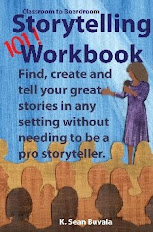


 Posts
Posts


